
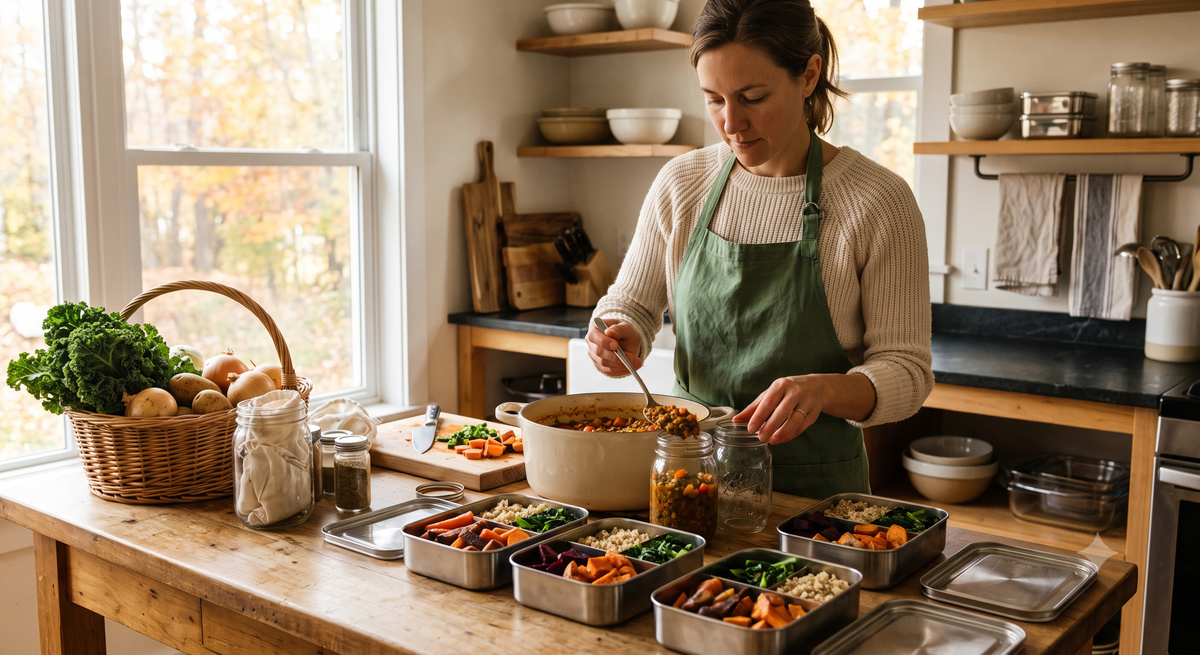
September and October have a way of filling a calendar faster than any other stretch of the year. School schedules ramp back up, after-school activities start competing for the same two hours every evening, and the daylight that made a 7 p.m. dinner feel leisurely in July is gone by the time everyone’s actually home. Sunday meal prep — setting aside an hour or two to get ahead of the week — stops being a nice-to-have during this stretch and starts being the thing that keeps weeknights from falling apart entirely.
The good news is that a genuinely useful meal-prep routine doesn’t require a kitchen full of single-use containers, disposable prep tools, or a pile of plastic gadgets that only get used once a week. A well-equipped Kitchen Essentials collection of durable, reusable tools handles a Sunday prep session just as well — often better — than the disposable version most households default to.
Why Fall Specifically Changes Meal Prep
Meal prep matters year-round, but fall adds a specific kind of pressure that summer doesn’t. Summer schedules tend to be looser — later bedtimes, more flexible mealtimes, longer daylight that makes a 6:30 dinner feel unhurried even if it’s actually happening later than planned. Fall compresses all of that. Earlier sunsets make evenings feel shorter even when they technically aren’t, school and extracurricular schedules lock in fixed windows that don’t move, and the transition itself (new routines, new schedules, new homework loads) adds a layer of mental load that summer didn’t have.
That combination is exactly why a Sunday prep session pays off more in fall than in any other season. An hour spent chopping vegetables, portioning proteins, or pre-cooking a base recipe on Sunday afternoon directly reduces the number of decisions and dishes required on a Tuesday evening when everyone’s coming home at different times with different amounts of patience left.
Setting Up a Prep Station That Actually Works
The physical setup of a prep session matters more than most people give it credit for. A cramped, disorganized counter turns a one-hour task into a ninety-minute one, mostly spent hunting for the right tool or wiping down a cutting board that’s already covered in three different ingredients. A 16-inch bamboo cutting board with handle gives enough surface area to handle a real prep session — chopping several vegetables in sequence — without needing to stop and clear the board every few minutes, and the handle makes it easy to carry a full board of prepped ingredients straight to the stove or a storage container.
Having the right cutting tools within reach matters just as much. A 4-piece bamboo kitchen utensil set covers most of what a prep session actually needs — stirring, flipping, serving — without switching between mismatched tools pulled from three different drawers. For anything that needs turning or lifting directly, a bamboo barbecue grilling tong works just as well indoors for turning roasted vegetables or portioning proteins as it does outdoors.
Batch-Cooking Basics for Fall
Fall meal prep tends to center around a handful of repeatable basics: a roasted vegetable tray, a grain or pasta base, a protein cooked in bulk, and a sauce or dressing that can flex across multiple meals. None of this requires specialized equipment, but it does benefit from tools that make repetitive tasks faster rather than slower.
A large charcuterie-style board with a built-in utensil drawer — like the square charcuterie board with utensil drawer — doubles as a prep-and-serve surface during a batch-cooking session, since the drawer keeps small tools (a paring knife, measuring spoons) from cluttering the counter while the main surface stays clear for chopping. Once everything’s prepped, a kitchen serving set makes portioning batch-cooked meals into individual containers faster than digging through a drawer for mismatched spoons.
Coffee and Tea Deserve a Sunday Routine Too
Meal prep conversations tend to focus entirely on food, but the same busy-fall-week logic applies to coffee and tea. A rushed weekday morning is exactly when a slower, more deliberate ritual gets skipped entirely — which is part of why setting up a simple coffee or tea station during Sunday prep pays off all week. A bamboo French press set out and ready to go removes one small decision from a rushed Tuesday morning, and a bamboo coffee cup holder keeps travel mugs organized and ready to grab on the way out the door.
For tea drinkers, a tea strainer and a set of bamboo tea coasters make a quick weekday cup feel less like an afterthought, especially once the weather turns and a hot drink becomes more of a daily fixture than a weekend indulgence. Sourcing matters here too — the Rainforest Alliance works with coffee and tea farmers on sustainable growing practices, which is worth keeping in mind alongside the tools used to brew it.
Storing What You’ve Prepped
Meal prep only pays off during the week if what gets prepped on Sunday is easy to find and easy to reach for on a Wednesday night. This is less about specific products and more about a habit: grouping prepped ingredients by how they’ll actually be used (a roasted vegetable tray meant for grain bowls stored next to the grain itself, rather than scattered across different shelves), and keeping the tools used to serve them within easy reach of the fridge rather than buried in a drawer across the kitchen.
A woven coaster set sounds like a small detail in this context, but a busy week often means more meals eaten at a counter or coffee table rather than a formal table setting — having coasters already out and accessible removes one more small friction point from a rushed weeknight dinner.
Making Sunday Prep a Repeatable Habit, Not a One-Time Effort
The households that stick with meal prep through a busy fall season tend to keep the process itself simple and repeatable, rather than reinventing the menu and the method every single week. Picking two or three base recipes that rotate through the month, keeping a consistent set of tools in the same spot on the counter, and treating Sunday prep as a fixed calendar appointment (the same way a soccer practice or piano lesson is) all make the habit more durable than treating it as an optional extra whenever there’s spare time.
Durable, reusable tools matter here too, in a less obvious way. A prep routine that relies on disposable containers, one-use prep tools, or flimsy utensils that bend or crack under repeated weekly use becomes more expensive and more frustrating over a full season than one built around a smaller number of well-made pieces that hold up to weekly rotation. The Plastic Pollution Coalition has noted how much single-use plastic accumulates specifically around food prep and storage in an average household — exactly the category a weekly meal-prep habit touches most often.
What to Look for in Meal-Prep Kitchen Tools
Surface area that matches real batch cooking. A cutting board sized for a single dinner’s ingredients slows down a real prep session — a larger board, like the 16-inch bamboo cutting board, handles multiple ingredients without constant clearing.
Tools that transfer easily from prep to storage. Utensils that can portion directly into storage containers save a step compared to prepping on one surface and transferring with a different tool.
Durability across weekly repetition. A tool used every single Sunday needs to hold up to that frequency without warping or cracking — solid bamboo construction tends to outlast lighter plastic equivalents used at the same pace.
A setup that reduces decisions, not just dishes. The best meal-prep systems cut down on the number of choices needed on a weeknight, not just the number of things to wash — a fully stocked, organized prep station does both at once.
A Few Myths About Sustainable Meal Prep
“Meal prep requires a lot of single-use plastic containers to stay organized.” Durable, reusable storage and serving tools handle a weekly rotation just as well as disposable ones, without the recurring cost or the recurring waste.
“Sustainable kitchen tools aren’t sturdy enough for real batch cooking.” A well-made bamboo cutting board or utensil set is built for repeated daily use, not occasional light cooking — the same qualities that make bamboo durable in a personal care or bathroom product apply just as directly in a kitchen.
“Meal prep only saves time if you’re prepping entire meals.” Prepping components — a chopped vegetable tray, a cooked grain base — saves just as much weeknight time as prepping full meals, and it’s a far more manageable weekly habit to sustain.
“A busy fall schedule makes sustainable habits harder to maintain.” A well-organized prep routine actually makes sustainable choices easier during a busy season, since the tools and habits are already set up rather than being decided fresh every single night.
“Coffee and tea routines don’t really count as meal prep.” Anything that removes a decision or a step from a rushed weekday morning is part of the same prep logic — a ready-to-go French press or tea strainer works the same way a pre-chopped vegetable tray does.
Frequently Asked Questions
How much time should a typical Sunday meal-prep session take? Most households find that one to two hours covers a solid week’s worth of component prep — a roasted vegetable tray, a grain base, and a portioned protein — without turning Sunday into a full second workday.
What’s the single most useful tool for starting a meal-prep routine? A properly sized cutting board is usually the highest-leverage purchase, since undersized boards are the most common bottleneck in a real batch-cooking session.
Do I need special containers to make meal prep work? No — the focus here is on durable prep and serving tools rather than specific storage containers, though grouping prepped ingredients logically in whatever containers you already have makes a bigger difference than the containers themselves.
How do I keep a meal-prep habit going once the initial motivation fades? Treat it as a fixed weekly appointment rather than something you do “if there’s time” — the households that stick with it tend to protect that Sunday hour the same way they’d protect a standing commitment.
Does meal prep actually reduce household waste? Yes, in a couple of ways — it typically reduces last-minute takeout packaging, and a well-organized prep routine reduces the food waste that comes from forgotten ingredients going bad before they’re used. Eco-Cycle points to food waste as one of the largest and most overlooked categories of household waste, much of which comes down to ingredients bought with good intentions and never used.
What if my schedule doesn’t allow for a consistent Sunday prep time? The specific day matters less than having a consistent one — some households do this on Sunday afternoon, others on Monday evening — the key is picking one slot and protecting it weekly.
Can meal prep tools do double duty for other kitchen tasks? Generally, yes — a well-made cutting board, utensil set, or charcuterie board with storage isn’t a single-purpose meal-prep tool, it’s a kitchen staple that gets used for entertaining, everyday cooking, and prep sessions alike.
Is it worth prepping coffee or tea setups in advance too? It’s a small thing, but setting out a French press or tea strainer during Sunday prep removes a small decision from a rushed weekday morning, which adds up across a busy week.
Getting Ahead of the Week
A busy fall season doesn’t leave much room for elaborate systems, and it doesn’t need to. A properly sized cutting board, a set of durable utensils, and a repeatable rotation of a few base recipes cover most of what a Sunday prep session actually requires. None of it depends on disposable tools or single-use containers — a well-equipped kitchen built around a smaller number of durable, reusable pieces handles a weekly prep habit just as well, and it holds up through an entire season of Sundays rather than needing to be replaced or restocked every few weeks. Setting that kitchen up once, before the fall schedule gets fully underway, is what makes the habit stick through the busiest stretch of the year.
🌿 Continue Your Journey
Enjoyed this article? Here are three ways to take the next step:
🌱 Make The Bamboo Switch™ Learn how one small change can create lasting impact.
🌎 Made The Bamboo Switch™ Join a growing community choosing progress over perfection.
🤝 Become a Bamboo Switch Guide Help others discover thoughtful, sustainable living while earning rewards.
Share:
Humidity, Mold, and Bamboo: Why Fall's Damp Weather Calls for a Material Check
Sustainability as a Founder Value: Why We Built Bamboo Switch the Way We Did