
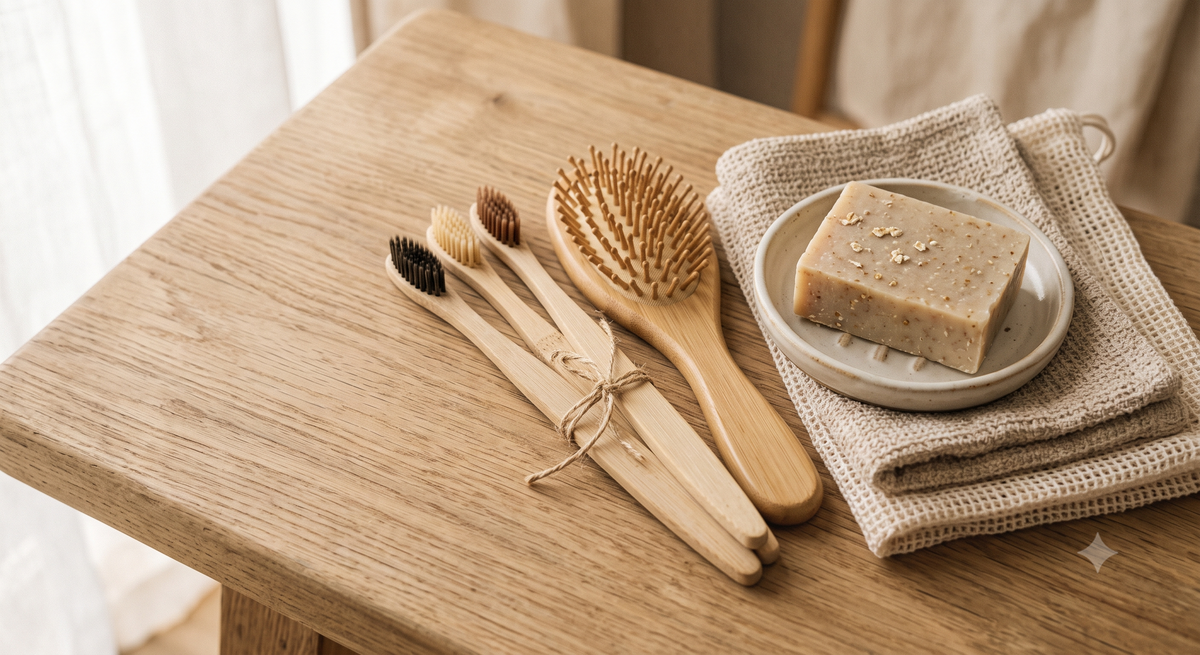
September has a strange psychological pull, even for people who haven’t been in a classroom in decades. New school supplies in every store, slightly cooler mornings, calendars turning a page — it all adds up to a “fresh start” feeling that rivals New Year’s Day for motivation, minus the pressure of a single midnight deadline. It’s a genuinely good moment to build a new habit, sustainable or otherwise, because the surrounding environment is already nudging toward routine and reset.
The problem is that most new habits — sustainable ones included — don’t fail because the person didn’t care enough. They fail because they were built the way most resolutions are: too many changes at once, too little structure around when and how the new behavior actually happens, and no plan for the first time it gets skipped. This is a practical, beginner-focused guide to building sustainable personal care habits that are actually built to last, using what’s genuinely understood about how habits form in the first place.
Why Most Sustainability Resolutions Don’t Survive Past Week Three
The instinct when starting something new is often to go big — replace everything plastic in the bathroom in one weekend, overhaul the whole routine overnight. It feels productive in the moment, but it also creates a lot of surface area for the habit to fail. Every new product is a new decision, a new step to remember, and a new place for the old routine to creep back in when life gets busy.
The Story of Stuff Project has spent years examining why consumer behavior change is so much harder to sustain than it is to start, and one consistent theme is that habits tied to a single dramatic decision tend to be more fragile than habits built through small, repeated actions. A single big switch is a decision; a small switch repeated daily becomes a habit — and habits, unlike decisions, don’t require willpower to maintain once they’re established.
How Habits Actually Form: The Cue-Routine-Reward Loop
Habit researchers generally describe habit formation as a loop: a cue triggers a routine, the routine produces a reward, and over enough repetitions, the brain starts running the routine automatically once it recognizes the cue — no active decision required. This is why brushing your teeth doesn’t feel like a chore requiring motivation each morning; the cue (waking up, walking into the bathroom) and the routine (grabbing the toothbrush) are so deeply linked that the behavior happens without conscious effort.
This matters enormously for building sustainable habits, because it means the goal isn’t to rely on motivation at all — motivation is what’s needed to start a habit, not what sustains it long-term. The goal is to attach a new, more sustainable routine to a cue that already exists. Swapping in a bamboo toothbrush works precisely because it slots into a cue-routine loop that’s already automatic — there’s no new behavior to learn, just a different tool doing the same job at the same moment in the day.
Start With One Room, Not the Whole House
The single most effective beginner strategy is picking one area — the bathroom counter, specifically — and focusing there before expanding anywhere else. A full Personal Care collection swap doesn’t need to happen in a single order. Starting with a bamboo toothbrush and a bamboo toothbrush holder — two items tied to the exact same daily cue — builds early momentum without overwhelming the routine with a dozen new decisions at once.
Once that first swap feels automatic, usually somewhere between two and four weeks in for most people, adding the next piece — organic bamboo floss or a tooth tablet refill pack — attaches to the same established cue rather than requiring an entirely new one. This is how a full routine gets built over a season, not a single weekend, and why it tends to actually hold.
Sequencing a Beginner’s Routine
Weeks one and two: the toothbrush. Replace just the toothbrush and its holder. This is deliberately the smallest possible first step, chosen because it touches the same twice-daily cue everyone already has.
Weeks three and four: oral care fully. Add organic bamboo floss or a bamboo floss refill pack and, if ready, tooth tablets to replace tubed toothpaste — the entire oral care routine is now attached to the same cue as before.
Weeks five and six: the shower. Introduce a charcoal shampoo bar and a sisal soap bag to hold it, plus an all-natural loofah sponge or a sisal exfoliating glove — new cue this time (the shower), but by now the pattern of “swap one thing, let it settle” is itself becoming a habit.
Weeks seven and beyond: the details. Bamboo cotton ear buds, a bamboo paddle hairbrush, and a bamboo facial rounds holder round out the routine last, once the bigger, more frequent swaps are already second nature.
What to Do When the Habit Breaks (Because It Will)
Every habit, sustainable or otherwise, gets interrupted eventually — travel, a busy week, running out of a product before a replacement arrives. The mistake most beginners make isn’t the interruption itself; it’s treating one missed day as proof the whole effort failed, which tends to spiral into abandoning the habit altogether rather than just picking it back up. Habit research consistently shows that a single skipped instance barely affects long-term habit strength, but the story people tell themselves about that skip often determines whether the habit survives.
The practical fix is preparing for interruptions in advance rather than being surprised by them. Keeping a spare bamboo toothbrush or a backup tooth tablet refill pack on hand means a delayed reorder doesn’t force a temporary fallback to whatever’s available at a drugstore. The goal isn’t perfection — it’s making the sustainable choice the easiest one to reach for, even on an off week.
Why Small Switches Compound Over a Year
A single swapped toothbrush doesn’t move the needle much on its own, and it’s tempting to wonder if any of this actually matters at that scale. But the American Bamboo Society has noted that bamboo’s rapid regrowth cycle means even modest household-level demand for bamboo goods supports a genuinely renewable supply chain in a way that demand for slow-growing hardwood or petroleum-based plastic never can. And on the plastic side of the equation, the Plastic Pollution Coalition notes that most plastic ever produced still exists somewhere in the environment today, since it doesn’t biodegrade the way plant-based materials do. Multiply one household’s full personal care routine switch across a full year, and the plastic that would have been purchased, used briefly, and discarded adds up to a meaningful amount avoided — not because of one dramatic decision, but because of a habit that simply kept running in the background, month after month.
What to Look for When Starting Your Own Routine
A single starting point, not a full haul. Buying one or two items tied to an existing daily cue works better long-term than a large first order meant to replace everything at once.
Products built for the cue they’re replacing. A toothbrush or shampoo bar needs to fit into the same moment in the day as what it’s replacing — if it requires an entirely new step or location, it’s fighting the existing habit loop rather than working with it.
Realistic timelines, not overnight results. Most people report a new personal care habit feeling automatic somewhere in the three-to-six-week range — expecting instant permanence sets up an unnecessary sense of failure early on.
A brand transparent about its own footprint. It’s worth checking whether a company backs sustainability claims with specifics — Bamboo Switch’s Climate Commitment offsets shipping emissions on every order, which matters just as much as the product itself for a beginner building trust in a new routine.
A Few Myths About Building Sustainable Habits
“You have to overhaul everything at once for it to count.” Habit research suggests the opposite — a single small, well-anchored swap is far more likely to stick long-term than a dramatic overnight overhaul that’s harder to maintain once the initial motivation fades.
“If you miss a day, you’ve broken the habit and have to start over.” One missed instance has minimal effect on long-term habit strength; the bigger risk is treating a single skip as a reason to abandon the routine entirely rather than simply resuming it the next day.
“September is just an arbitrary date — habits don’t care what month it is.” The date itself doesn’t matter mechanically, but the surrounding cultural cues of a “fresh start” period genuinely do help, since they add extra motivation right at the moment a new habit needs the most reinforcement to get off the ground.
“Sustainable products are harder to build a habit around than conventional ones.” A well-designed sustainable swap fits into the exact same cue and routine as what it replaces — a bamboo toothbrush is picked up at the exact same moment a plastic one would be, which means there’s no extra behavior to learn.
“Small swaps don’t add up to anything meaningful.” A single habit repeated daily for a year adds up to hundreds of repetitions — the cumulative effect of one small, consistent swap is considerably larger than it appears from any single day.
Frequently Asked Questions
How long does it actually take for a new habit to feel automatic? Estimates vary by person and behavior, but most people report a new routine feeling largely automatic somewhere between three and eight weeks of consistent repetition.
What’s the best first product to switch for someone just getting started? A toothbrush is usually the easiest starting point, since it’s used at a consistent daily cue and doesn’t require learning any new behavior beyond picking up a different object.
Is it better to switch one category at a time or spread swaps across the whole house? Concentrating on one room or routine first, like oral care, tends to build stronger momentum than spreading a handful of small swaps thin across many unrelated areas at once.
What should I do if I run out of a sustainable product before my next order arrives? Keeping a small backup supply on hand for frequently used items, like an extra tooth tablet refill pack, prevents a temporary gap from turning into reverting back to an old habit out of convenience.
Does it matter what time of year I start building a new habit? Any time works mechanically, but a period with built-in “fresh start” cues, like September or January, gives an extra motivational boost right when a new habit needs it most.
How many new products should I introduce at once? Starting with just one or two items tied to the same daily cue is generally more sustainable long-term than introducing five or six changes simultaneously.
What if I’ve tried building sustainable habits before and it didn’t stick? A previous attempt not sticking often comes down to trying to change too much at once rather than a lack of commitment — starting smaller this time, with a single well-anchored swap, tends to produce a different result.
Are habit-tracking apps or journals necessary for this to work? They’re optional — some people find tracking helpful for early motivation, but the underlying mechanism (a consistent cue paired with a consistent routine) works with or without formal tracking.
Building a sustainable routine that actually lasts has less to do with willpower and more to do with how the habit is structured from the start. One small swap, attached to a cue that’s already part of the day, repeated consistently over a few weeks — that’s the entire mechanism behind every lasting habit, sustainable or otherwise. September’s fresh-start energy is a genuinely good moment to begin, but the real work happens in the quiet, unremarkable repetition of week four, five, and six, long after the initial motivation has faded and the habit has simply become how things are done.
🌿 Continue Your Journey
Enjoyed this article? Here are three ways to take the next step:
🌱 Make The Bamboo Switch™ Learn how one small change can create lasting impact.
🌎 Made The Bamboo Switch™ Join a growing community choosing progress over perfection.
🤝 Become a Bamboo Switch Guide Help others discover thoughtful, sustainable living while earning rewards.
Share:
Labor Day Cookout, Zero Waste: Hosting Your Last Backyard BBQ of Summer
Cozy Season Prep: Transitioning Your Bathroom for Fall