
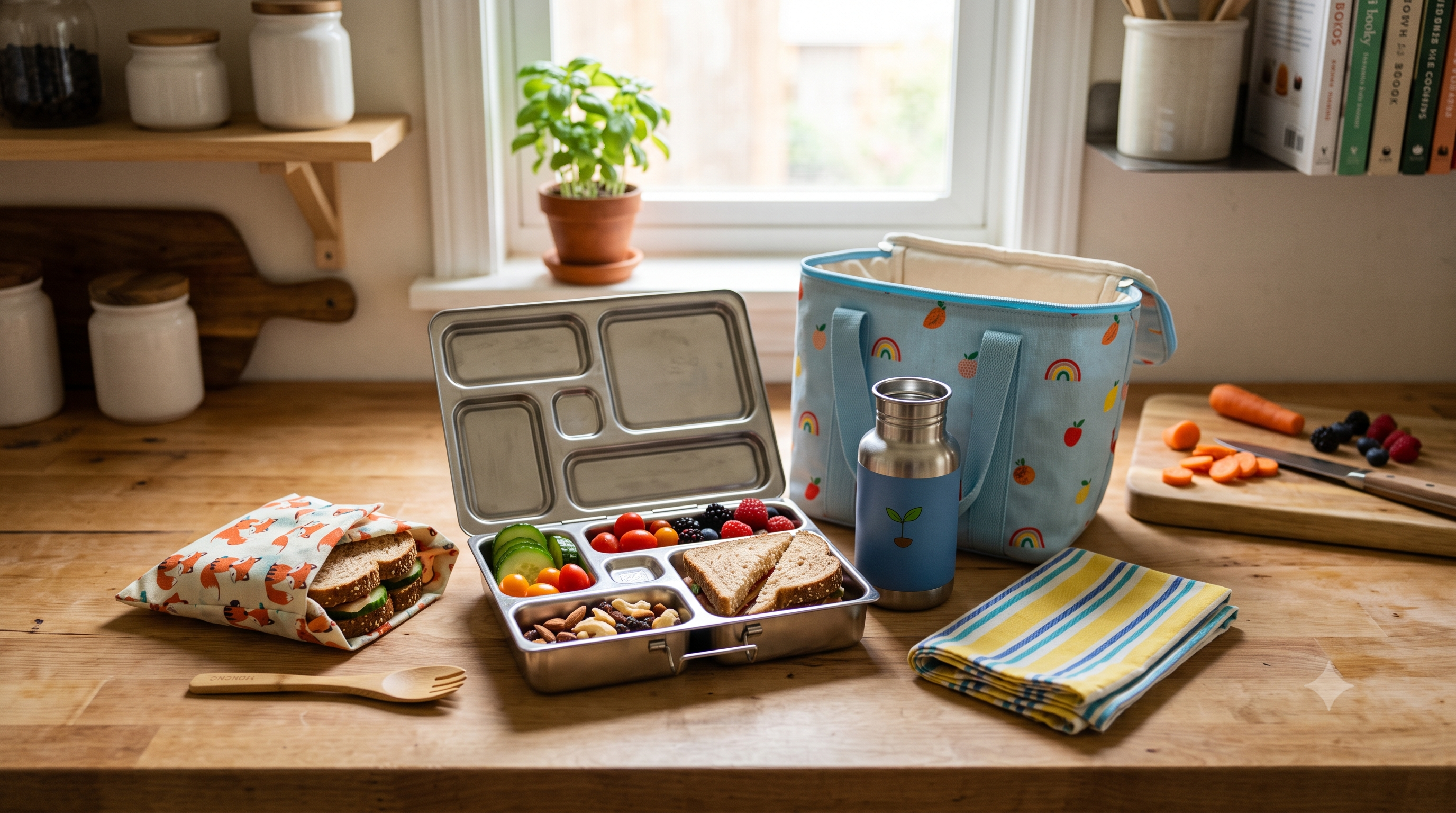
The week before school starts has a familiar rhythm in most households: new shoes, new folders, a fresh backpack, and a scramble to figure out what lunch is going to look like for the next nine months. It’s also, without much fanfare, one of the biggest plastic-consumption moments of the entire year — plastic sandwich bags, single-use juice pouches, disposable utensils, and plastic wrap all get bought in bulk right alongside the school supplies, often without much thought given to any of it. The Plastic Pollution Coalition has specifically flagged single-use lunch packaging as a recurring, easily overlooked source of household plastic waste, precisely because it’s purchased in bulk and used in such small individual increments that the total volume rarely gets noticed.
Building a zero-waste lunch kit is really a one-time setup project disguised as a daily chore. Get the right small set of reusable pieces in place before the first day of school, and packing lunches for the rest of the year becomes a five-minute routine instead of an ongoing stream of plastic bags and pouches that need restocking every week or two.
Why Back-to-School Season Is a Natural Reset Point
There’s something useful about the specific timing of back-to-school season for building new household habits. Everything else in a kid’s routine is already being refreshed — new supplies, new schedules, sometimes a new school entirely — which makes it a low-friction moment to introduce a new lunch routine too, rather than trying to change a habit that’s already deeply set from a full school year of repetition.
It’s also a moment when a family is already thinking in terms of “what do we need to get through the year,” rather than making one-off purchases as problems come up. That planning mindset is exactly the right one for building a reusable lunch kit, since the whole point is buying it once and using it for months, rather than restocking disposable versions every single week. The Story of Stuff Project has written specifically about how seasonal shopping moments like back-to-school season are an ideal window for households to reset a habit, since the mental effort of “figuring out what we need” is already happening anyway.
The Core of the Kit: Reusable Cutlery
Disposable plastic utensils are one of the most avoidable pieces of a packed lunch, and also one of the easiest to fix permanently. A bamboo travel cutlery set tucks into a lunch bag the same way a disposable fork would, but comes home to be washed and reused the next day instead of getting thrown away after one use. For younger kids especially, having their own set that lives in their own lunch bag — rather than sharing from a household drawer — tends to make the habit stick better, since it becomes “their” lunch gear rather than a shared household item they have to remember to bring back.
Snacks and Portions Without the Plastic Baggie
Portioning snacks is where a lot of single-use plastic sneaks into a packed lunch — individually bagged crackers, pre-portioned trail mix, small containers of dip that get tossed after one use. A bamboo spice jar works surprisingly well repurposed as a small, reusable container for nuts, trail mix, or dried fruit — it’s sized right for a single kid’s portion and seals well enough to travel in a lunch bag without spilling. For a sweeter addition, a honey dipper makes drizzling a bit of honey over oatmeal, yogurt, or a homemade snack simple without needing a single-use honey packet at all — a small swap, but one that adds up across a school year of lunches.
Prepping at Home: The Kitchen Side of Lunch Packing
A good lunch kit isn’t just what goes in the bag — it’s also what makes the prep itself faster on a weekday morning when everyone’s running behind schedule. A bamboo cutting board with handle makes quick work of slicing fruit, cheese, or sandwich fillings, and its built-in handle makes it easy to carry straight from the counter to the lunch bags lined up for packing. A 4-piece kitchen utensil set covers the rest of the actual cooking and serving that happens before anything gets packed — spreading, mixing, portioning — without a drawer full of mismatched plastic tools.
For parents packing several lunches in a row each morning, a kitchen serving set speeds up the process of dishing out identical portions of the same side dish across multiple lunch bags, which matters more than it sounds like once you’re doing it for two or three kids at once, five mornings a week.
The Thermos and Straw Situation
Drinks are their own small category of back-to-school plastic. Juice boxes and pouches come with a plastic straw attached, used once and thrown away, day after day. Swapping to a reusable thermos paired with a set of organic bamboo straws with a coconut coir straw cleaner removes an entire category of single-use plastic from the lunch bag, and the straw cleaner that comes with the set makes the daily rinse-and-reuse cycle simple enough that kids can often manage it themselves by mid-year.
After-School Snack Time: Extending the Habit
The zero-waste habit doesn’t have to stop at the lunch bag. Once kids get home, an after-school snack moment is a natural extension of the same routine. A woven coaster set on the kitchen table turns snack time into a small, deliberate moment rather than food eaten standing over the counter, and it’s a small, low-effort way to reinforce that reusable, non-disposable habits apply throughout the day, not just during the school hours.
Getting Kids Actually on Board With the Kit
A reusable lunch kit only works long-term if the kids using it actually want to use it, which means involving them in choosing their own pieces rather than just handing them a fully assembled kit. Letting a child pick their own cutlery set or straw color, within whatever options are available, gives them a small sense of ownership over the routine, which tends to matter more for follow-through than any amount of parental explanation about why plastic waste is a problem.
It also helps to build in the return trip from the start: teaching kids to bring the cutlery, container, and straw back home every day, rather than leaving them in a locker or backpack pocket, is really the entire mechanism that makes a reusable kit work at all. A kit that stays lost in a backpack for a week doesn’t get washed and reused — it just becomes one more thing that has to be replaced. Eco-Cycle points to exactly this kind of routine-building, done early and consistently, as the difference between a household habit that lasts for years and one that quietly reverts back to disposable convenience after a few weeks.
What to Look for When Building the Kit
Durability for repeated daily use. A lunch kit gets used, washed, and reused roughly 180 times over a school year, so pieces built for genuine daily use matter more here than they would for an occasional-use item.
Kid-manageable sizing. Cutlery, containers, and straws that a child can actually handle, open, and clean themselves make the routine sustainable without requiring an adult to manage every piece every day.
Pieces that travel well. A lunch kit gets tossed into a backpack and jostled around all day, so items that hold up to that kind of casual daily handling matter more than delicate versions of the same product.
A system, not just a single swap. Cutlery alone doesn’t remove all the plastic from a typical lunch — pairing it with a reusable container, straw, and drink solution covers the full range of what usually shows up disposable.
A Few Myths About Zero-Waste Lunch Packing
“Kids will lose or forget reusable items too often for this to work.” Some items do get lost occasionally, the same way a regular water bottle or jacket does — but most families find that building the “bring it home” step into the daily routine from week one solves this within the first month or so.
“Reusable lunch gear takes too much extra time in the morning.” Once the kit is established, packing a reusable lunch takes about the same amount of time as packing a disposable one — the time savings actually show up on the back end, in not having to restock sandwich bags and juice pouches every week.
“A full zero-waste lunch kit is expensive to set up.” A one-time purchase of cutlery, a container, and a straw set typically costs less over a school year than continuously buying disposable bags, wrap, and juice pouches, even though the upfront cost is more visible in a single purchase.
“Kids don’t care about the environmental reason, so this won’t stick.” It doesn’t need to stick because of the environmental argument — for most kids, it sticks because it’s simply their own gear, in colors or styles they picked, which is a more durable motivation day to day than an abstract sustainability lesson.
“Bamboo utensils aren’t sturdy enough for a kid’s lunch bag.” Solid bamboo cutlery holds up well to daily use, washing, and the general jostling of a backpack — it’s a genuinely different product than a thin, flimsy bamboo-look item, which is worth checking for when comparing options.
Frequently Asked Questions
What’s the minimum kit needed to get started? A bamboo travel cutlery set and a reusable straw are the simplest starting point — most families add a snack container and thermos once the cutlery habit is established.
How do I clean bamboo cutlery and containers between uses? A quick hand wash with warm water is usually enough for daily use — avoiding prolonged soaking helps bamboo pieces last longer than leaving them submerged in a sink overnight.
Is it realistic to expect young kids to manage this themselves? Younger kids often need reminders at first, but most manage the basics — bringing items home, a quick rinse — within the first few weeks, especially if the pieces are sized and styled for them specifically.
What do I use instead of a disposable straw for juice or milk? A set of organic bamboo straws with a coconut coir cleaner pairs with any reusable cup or thermos and comes with its own cleaning tool built in.
How do I portion snacks without individually wrapped packaging? A small reusable container — a bamboo spice jar works well repurposed this way — holds a single kid-sized portion of trail mix, crackers, or dried fruit without needing individual plastic bags.
What’s the best way to speed up lunch prep on busy mornings? Prepping ingredients the night before with a bamboo cutting board and portioning into containers ahead of time turns morning lunch packing into an assembly step rather than a full prep session.
Does this approach work for packing multiple kids’ lunches at once? Yes — a kitchen serving set speeds up portioning identical sides across several lunch bags, which is where a lot of the daily time savings actually comes from for larger families.
What happens if a piece breaks or gets lost partway through the year? Individual pieces can be replaced on their own without rebuilding the whole kit — most families find they only need to replace one or two items over a full school year, which is still a fraction of what disposable lunch packing would have used up in the same period.
Back-to-school season already asks a lot of a family’s routines, schedules, and budgets — building a zero-waste lunch kit doesn’t need to be one more complicated project layered on top of all of it. Set it up once during the same week you’re buying school supplies anyway, get the kids involved in picking their own pieces, and the actual daily routine of packing lunch becomes simpler than the disposable version ever was, one school year at a time.
🌿 Continue Your Journey
Enjoyed this article? Here are three ways to take the next step:
🌱 Make The Bamboo Switch™ Learn how one small change can create lasting impact.
🌎 Made The Bamboo Switch™ Join a growing community choosing progress over perfection.
🤝 Become a Bamboo Switch Guide Help others discover thoughtful, sustainable living while earning rewards.
Share:
Small Bathroom, Big Impact: A Studio-Apartment Plastic-Free Bathroom Makeover
Why Your Skin (and the Planet) Notices the Difference: Bamboo vs. Plastic Personal Care