
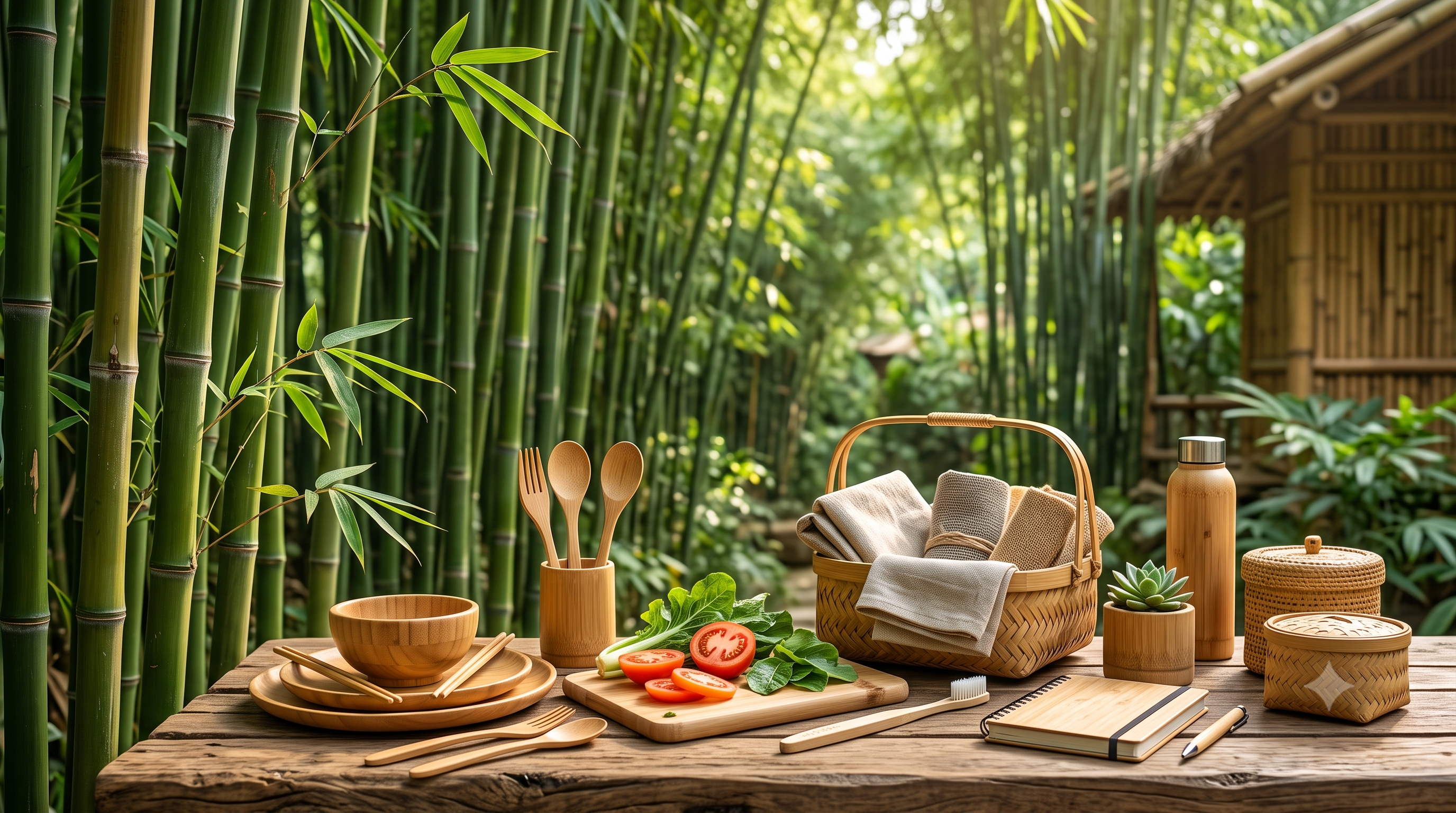
“Fast-growing means low quality.” Bamboo’s growth rate is a function of its rhizome biology, not a shortcut that compromises the material — properly harvested, dried, and finished bamboo is structurally comparable to many hardwoods, and in some tensile strength measurements, stronger.
“All bamboo products are equally sustainable.” Not quite — a solid, responsibly harvested bamboo piece and a thin bamboo veneer over a plastic core are very different products wearing the same material name. Sourcing and construction matter as much as the plant itself, which is why it’s worth checking a product description the same way you would for something like a bamboo toothbrush before assuming the label alone guarantees quality.
“Bamboo forests get depleted the way logging depletes forests.” Because bamboo regrows from an existing rhizome network rather than requiring a newly planted seedling, a responsibly managed bamboo grove can be harvested repeatedly without needing to be replanted from scratch — a meaningfully different regeneration model than clear-cut hardwood forestry.
Frequently Asked Questions
Is bamboo actually a grass, or is that just a marketing claim? It’s genuine botany — bamboo belongs to the grass family Poaceae, subfamily Bambusoideae, the same broad family as lawn grass and wheat, just on a dramatically larger structural scale.
How fast does bamboo really grow? It varies by species and growing conditions, but some of the fastest bamboo species can grow more than 60 centimeters in a single day, with a full harvestable stalk maturing in as little as three to five years.
Does harvesting bamboo damage the plant or the grove? No — because bamboo regrows from an underground rhizome network rather than a single root a tree depends on, a responsibly managed grove keeps sending up new stalks after harvest, the same way a lawn regrows after mowing.
Is bamboo stronger than wood? For its weight, several bamboo species measure favorably against many hardwoods and even some grades of steel in tensile strength — though actual performance depends heavily on the specific species, treatment, and how a product like a hairbrush is engineered and finished.
What happens to bamboo products at the end of their life? Solid, untreated or naturally finished bamboo breaks down the way any plant material does, unlike plastic, which persists for centuries and fragments into microplastics rather than fully decomposing.
Why does Bamboo Switch use bamboo instead of other sustainable materials? Bamboo’s combination of rapid regeneration, natural antimicrobial properties, and structural durability makes it a practical fit across a wide range of everyday products — from personal care items to kitchen tools to bathroom fixtures — in a way few single materials can match.
Are all species of bamboo used for the same kinds of products? No — there are over a thousand bamboo species, and only a subset are suited to the thick-walled, structurally durable stalks needed for furniture, flooring, or household goods. Species selection and proper harvesting age both affect how a finished product performs.
Does bamboo require pesticides or fertilizer to grow at this rate? Established bamboo groves generally require minimal pesticide or fertilizer input compared to many conventional row crops, since the plant’s dense growth habit and rhizome network make it naturally competitive against weeds and resilient to many common pests — though practices vary by grower and region.
Where can I see this material in its simplest form? Our Personal Care collection is a good starting point — items like a toothbrush handle or a hairbrush show bamboo’s natural grain and finish without much else layered on top.
Where This Series Goes Next
This is the foundation for a short series exploring how this same material performs in specific rooms of the home. Next up: why bamboo specifically outperforms plastic in the bathroom, followed by a look at why it’s the right material for the kitchen.
For now, take a look at our full Personal Care collection to see this material in its simplest, most everyday form. Every Bamboo Switch® product starts with the same plant — a fast-growing, naturally renewable grass — and every order ships with carbon-neutral shipping, so the material story starts sustainably and stays that way through delivery.
🌿 Continue Your Journey
Enjoyed this article? Here are three ways to take the next step:
🌱 Make The Bamboo Switch™ Learn how one small change can create lasting impact.
🌎 Made The Bamboo Switch™ Join a growing community choosing progress over perfection.
🤝 Become a Bamboo Switch Guide Help others discover thoughtful, sustainable living while earning rewards.
Share:
Zero-Waste Coffee and Tea Storage for Freshness
Why Bamboo Outperforms Plastic in the Bathroom