
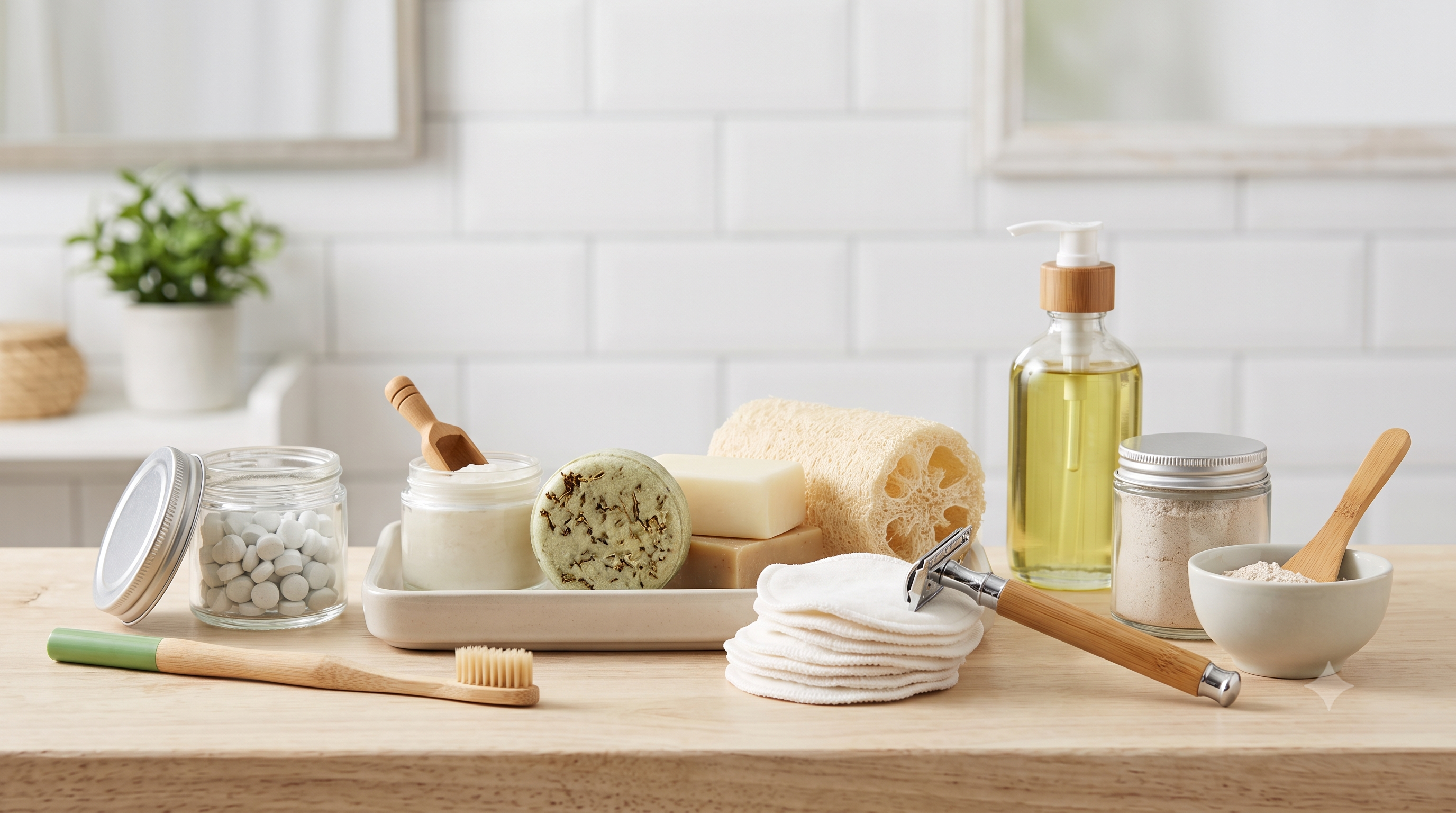
Most personal care routines run on autopilot — the same toothbrush, the same shampoo bottle, the same shower pouf, grabbed in the same order every single day without much thought. That's exactly what makes personal care such a good place to build a few permanent, low-effort swaps rather than something that requires daily willpower to maintain. Once the routine is set up right, it stays sustainable without you having to think about it again until something runs out.
This is the second article in our Plastic-Free Personal Care series. Our first guide covered why personal care plastic matters in general — this one goes deeper, building out a full routine step by step, from the first brush of the morning to the last rinse before bed.
Why Personal Care Is Such a Concentrated Source of Plastic
Most household plastic accumulates slowly, item by item, but personal care is where it's most concentrated relative to how often each item gets used. A toothbrush, a bottle of shampoo, a tube of toothpaste, and a shower pouf are all touched daily, sometimes more than once, and all eventually thrown away and replaced — usually without much thought about the material they're made from.
The pouf or mesh sponge many people reach for is a quiet offender in particular: synthetic loofahs are made from plastic mesh that sheds microscopic fibers with every use, which go straight down the drain and into the local water system. None of this is a matter of anyone doing anything wrong — it's just the default a personal care routine has been built around for decades.
Step One: Dental Care
The foundation of a zero-waste personal care routine starts with the item used most often: the toothbrush. A bamboo toothbrush replaces one of the most commonly discarded plastic items in any home, and a bamboo toothbrush stand keeps it upright and drying properly between uses, which matters more than it sounds like it would for how long the bristles actually last.
Paired with the brush, natural toothpaste tablets replace the plastic squeeze tube entirely — you simply chew a tablet, wet your brush, and go — and a bamboo floss refill pack or bamboo charcoal floss in a reusable glass container finishes the routine without a plastic floss case getting tossed every few weeks.
Step Two: Hair Care
Once dental care is covered, hair care is the next place plastic tends to hide, mostly in the form of shampoo and conditioner bottles. A full-size bar from our shampoo bar collection does the same job as a bottled version without the plastic packaging, and a single bar typically lasts as long as two to three bottles of liquid shampoo, since a little goes further than most people expect the first time they use one.
A bamboo paddle hairbrush rounds out this step, replacing the plastic-and-nylon brush most people reach for daily. Its wide, gentle pins tend to be easier on both hair and scalp than a synthetic paddle, and unlike plastic, bamboo doesn't build up static the same way over time.
Step Three: Skin Care
The routine doesn't end with hair. A natural exfoliating loofah made from an actual loofah plant (not synthetic mesh shaped to look like one) does the job of a plastic pouf without shedding microplastic fiber into the water with every use, and it composts fully at the end of its life instead of persisting in a landfill. For a gentler option, a sisal exfoliating glove works well for more sensitive skin.
If bar soap is part of this step, a sisal soap saver bag makes the most of every last sliver instead of it going soft and wasted in a dish. And for the smaller daily details, a bamboo facial rounds holder keeps reusable rounds tidy on the counter, and bamboo cotton ear buds replace a genuinely surprising volume of plastic-stemmed swabs over the course of a year.
Why Bamboo and Natural Fibers Actually Perform Better Here
Personal care tools live in one of the most consistently humid parts of the home, which makes them a fitting place for materials naturally suited to moisture rather than merely tolerant of it. Bamboo's natural antimicrobial properties matter enormously here — a toothbrush handle or hairbrush sits in a damp bathroom daily, exactly the condition where plastic tends to develop the kind of microbial buildup that causes lingering odor over time.
Natural fiber loofahs behave similarly well: they dry faster between uses than synthetic mesh poufs, which tend to stay damp in their folds — a small but real hygiene concern — and they don't degrade into shedding plastic fiber the way a synthetic pouf does after a few weeks of daily use. None of these materials ask you to sacrifice performance for sustainability — in a wet, daily-use routine like this one, they frequently hold up better than their plastic counterparts, not just longer, which is a rare case where the more sustainable choice and the higher-performing one turn out to be exactly the same product.
The Real Cost of a Fully Bottled, Plastic Routine
It's worth running the numbers on what a fully disposable personal care routine costs over a year, since the comparison rarely comes up until after you've already made the switch. A household running through a bottle of shampoo roughly monthly, a tube of toothpaste every month or two, and a box of plastic-stemmed cotton swabs is buying a genuinely large stack of plastic packaging annually, on top of a toothbrush replaced every three to four months and a synthetic pouf replaced every few weeks as it starts to fray.
A shampoo bar, toothpaste tablets, and a natural loofah replace all of that with a handful of purchases spread across the same year — often at a comparable or lower total cost, and without a single bottle, tube, or synthetic pouf added to the trash in the process. The savings aren't dramatic on any single purchase, but they compound the same way the plastic would have.
What to Look for When Choosing Personal Care Products
Not every "natural" or "eco" personal care product on the market is what it claims to be, and this routine touches your skin, hair, and teeth directly, which makes ingredient transparency worth a closer look than it might get for, say, a kitchen tool.
Independent nonprofits make this easier to check. MADE SAFE certifies personal care products against a list of chemicals of concern, and the Environmental Working Group maintains a searchable database that rates personal care ingredients by safety profile — both are useful starting points if you want to verify a shampoo bar or toothpaste tablet beyond whatever the front-of-package marketing claims. It's also worth remembering that "natural" isn't automatically synonymous with "better for the ocean" — the 5 Gyres Institute has specifically flagged synthetic loofahs and exfoliating microbeads (now banned in rinse-off products in the U.S., though still found in some imported goods) as a recurring source of the microplastic pollution they track in oceans and waterways.
A Starter Routine Checklist
If you're building this routine from scratch rather than swapping one item at a time, here's a simple starting point:
- A bamboo toothbrush and stand, plus toothpaste tablets and a refillable floss container
- A full-size shampoo bar (and conditioner bar, if you use one)
- A natural loofah sponge or a sisal exfoliating glove
- A soap saver bag if bar soap is part of your routine
- A hairbrush, facial rounds holder, and cotton ear buds for the smaller daily details
For an easier starting point, browsing our full Personal Care collection in one visit is often simpler than building the routine product by product if you're starting completely fresh.
A Few Myths About a Bar-and-Bamboo Routine
"Bar soap and shampoo bars don't lather as well as bottled versions." Most of the lather difference people notice comes down to water hardness and technique — rubbing the bar directly on wet hair or skin versus lathering it in your hands first — not a fundamental limitation of the format. A quick adjustment in technique usually closes the gap within a wash or two.
"Bars are more expensive per use than bottles." Typically the opposite — a shampoo bar that lasts as long as two or three bottles of liquid shampoo, at a similar or lower price point, works out to a lower cost per wash over time, even before accounting for the packaging you're no longer buying.
"Natural loofahs don't last as long as synthetic ones." With proper care — rinsing thoroughly and letting it dry fully between uses — a natural loofah typically lasts about as long as a synthetic pouf, and unlike the synthetic version, it composts completely at the end of its life instead of sitting in a landfill.
"Toothpaste tablets are a downgrade from paste." Most people find the adjustment period is shorter than expected — a tablet chews into a paste-like consistency within a few seconds, and the actual cleaning ingredients are comparable to a standard toothpaste, just without the plastic tube.
Common Questions About a Zero-Waste Personal Care Routine
Do shampoo bars work for all hair types? Most formulations work well across hair types, though very hard water can sometimes leave a slight residue on certain hair textures — a diluted vinegar rinse afterward resolves this for most people who notice it.
How long does a bar of soap or shampoo actually last? With proper storage that keeps the bar dry between uses, a standard bar typically lasts four to six weeks of daily use, comparable to or longer than a similarly priced bottled product.
Is it normal for a natural loofah to shed some fiber at first? A small amount of shedding when a loofah is brand new is normal and stops within the first few uses — this is unrelated to the ongoing microplastic shedding of a synthetic pouf, which continues for the entire life of the product.
Can I switch just part of my routine, or does it need to be all at once? Any single swap — toothbrush, shampoo bar, or loofah — reduces plastic waste immediately on its own. Most people find it easier to swap one item, get comfortable with it, and then move to the next rather than replacing an entire routine in one trip.
How should I store bars and tablets so they last longer? Keeping bars out of standing water is the single biggest factor for soap and shampoo — a draining dish or a small ventilated tray does the job. Toothpaste tablets keep best in their original container, away from humidity, so they don't soften prematurely.
Where This Hub Goes From Here
This is the second stop in our Plastic-Free Personal Care series, building on the foundational guide we covered first. For now, take a look at our full Personal Care collection and consider which part of your routine is overdue for a swap. And if you're looking for more support along the way, Made The Bamboo Switch™ is a good place to see how other households have rebuilt their own routines one brush, bar, and bottle at a time.
🌿 Continue Your Journey
Enjoyed this article? Here are three ways to take the next step:
🌱 Make The Bamboo Switch™ Learn how one small change can create lasting impact.
🌎 Made The Bamboo Switch™ Join a growing community choosing progress over perfection.
🤝 Become a Bamboo Switch Guide Help others discover thoughtful, sustainable living while earning rewards.
Share:
Your Laid-Back Backyard Tea Gathering
Setting Up a Plastic-Free Guest Bathroom