
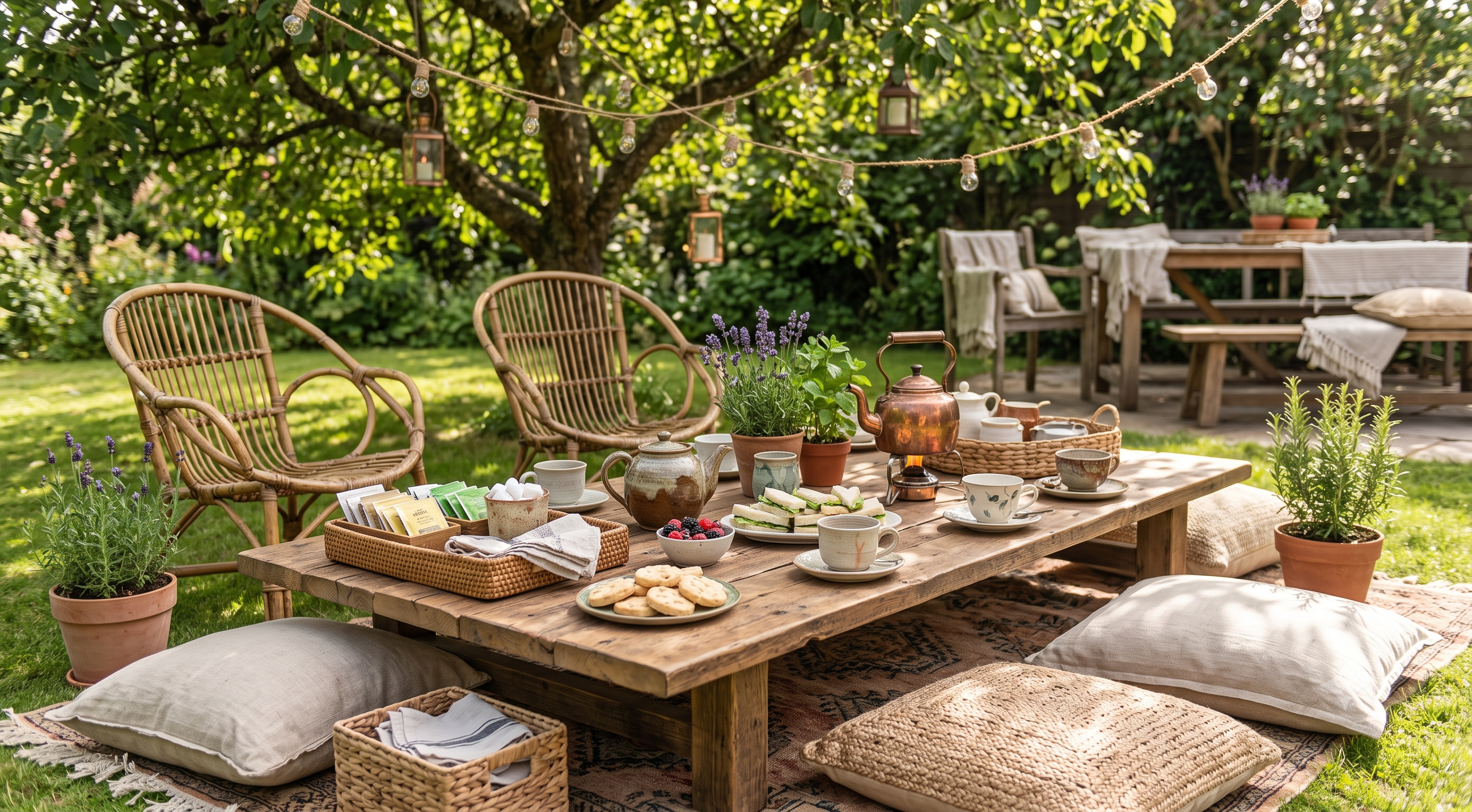
A good tea gathering has never needed much — hot or iced tea, good leaves, a table, and people willing to sit outside for an hour. Somewhere along the way, though, hosting got tangled up with disposable everything: paper cups for guests who "don't want to dirty a mug," individually wrapped tea bags, plastic stir sticks for the one person who takes honey. None of it makes the gathering better. It just makes the cleanup feel like less commitment, at the cost of a backyard table that looks like a coffee shop trash can by the end of the afternoon.
This is the second article in our Zero-Waste Kitchen Essentials series, and the quieter half of our Summer Entertaining arc. Our first guide in this arc covered building a plastic-free BBQ kit for the grill — this one is about the other kind of summer hosting: a relaxed backyard tea gathering, set with reusable pieces instead of anything disposable.
Why Hosting Tends to Produce More Waste, Not Less
There's a reason hosting habits skew disposable: it feels like the considerate choice. Nobody wants a guest hand-washing their own mug, and paper cups seem like they solve that politely. But the actual waste math tells a different story. A stack of paper cups, once used, is generally not recyclable if they have any plastic lining (which most do, for structural strength), and individually wrapped tea bags produce a small mountain of foil and paper packaging for something that took three minutes to steep.
The irony is that a well-set reusable table often reads as more thoughtful, not less — guests notice a matched set of cups and a proper tea tray far more than they'd notice (or thank you for) a paper cup. Hosting sustainably isn't really a trade-off against hospitality; in most cases, it's an upgrade to it.
Think about the last time you attended a gathering and actually complimented the disposable cups — probably never. Now think about the last time you noticed (and maybe even asked about) a nice set of mugs, a matched tea tray, or a well-chosen serving piece. Hosting waste is largely invisible when it's disposable and largely noticed when it isn't, which runs exactly backward from how most people assume guests will react.
This lines up with how organizations like the Zero Waste International Alliance define zero waste itself: not an all-or-nothing purity test, but a hierarchy that favors reusable, durable choices over disposable ones wherever it's reasonably possible. A backyard tea gathering is about as reasonable a place to apply that as exists — nobody is drinking tea on the move or in a hurry.
Setting the Table: The Core Pieces
A backyard tea gathering doesn't require an elaborate setup, but a few well-chosen pieces make it feel intentional rather than improvised.
Start with steeping. A stainless steel tea strainer per pot (or one per guest, for a more personal touch) lets everyone steep loose-leaf tea to their own preference without a stack of used bags piling up on saucers. If matcha or iced tea is part of the spread, a bamboo matcha whisk paired with a bamboo chashaku scoop turns preparation into a small piece of the entertainment — guests tend to gather around to watch matcha get whisked, in a way nobody gathers around to watch a tea bag steep.
For serving, a porcelain matcha whisk holder keeps your whisk shaped and dry between uses, which matters if you're making more than one round on a warm afternoon. A bamboo honey dipper spoon is a small, easy addition to a tea tray that replaces the single-use honey packets or plastic squeeze bottles that show up at a lot of gatherings, and it looks considerably nicer sitting on a backyard table.
None of this needs to be purchased all at once. A tea gathering setup tends to grow the same way a BBQ kit does — one piece added each time you host, until eventually you have a full tray without ever having done a single big shopping trip.
Protecting the Table (and Making Cleanup Easier)
The parts of hosting outdoors that actually take effort are rarely the tea itself — it's the table protection and the cleanup afterward, especially with a breeze and bare wood picnic tables in the mix. This is where a few small textile-adjacent pieces earn their keep.
A woven coaster set or a bamboo tea coaster and holder set protects your table from both heat and condensation rings — condensation matters even more outdoors with iced tea in the mix — and unlike paper coasters, they don't end up in the trash the moment the gathering ends. A bamboo coffee cup tree holder does double duty here too: it keeps a small collection of mugs or glasses visible and ready to grab, which subtly signals to guests that reusable is the default, not something they need to ask permission to use.
Cleanup, in practice, tends to take less time than a "disposable" gathering once you account for gathering up napkins, cups, and wrappers scattered across a yard. Rinse, air-dry, and everything is ready for the next time — no trash bag required, and nothing left behind on the lawn for the next mow.
Why Bamboo Fits a Backyard Hosting Table Specifically
Bamboo tools bring something to a hosting table that goes beyond sustainability: they photograph and feel more considered than most disposable alternatives, which matters when part of hosting is creating an atmosphere. The warm, natural grain reads as intentional in a way a stack of paper cups never quite manages, regardless of how nice the print on them is — and it holds up just as well outdoors on a picnic table as it does on a kitchen counter.
There's a practical side too. Bamboo is naturally antimicrobial, which is a genuine advantage when multiple guests are handling shared serving pieces like a honey dipper or a whisk over the course of an afternoon outdoors. It also doesn't retain odors or flavors between uses the way some materials can, so a matcha whisk used for green tea one weekend won't carry any trace of it into a black tea gathering the next.
And because these are pieces meant to be reused indefinitely rather than restocked, the cost of hosting actually goes down each time you do it. A box of individually wrapped tea bags and paper cups is a recurring expense for every gathering; a proper tea tray is a purchase you make once and then simply set out, cookout after cookout, tea gathering after tea gathering.
It's also worth thinking about where the tea itself comes from, not just what it's served in. Groups like the Rainforest Alliance work with tea-growing communities on farming practices that protect the same forests and water systems your gathering is, in a small way, trying to be considerate of — a detail worth mentioning to guests who ask where the tea came from.
A Simple Backyard Tea Gathering Checklist
If you're hosting for the first time with this approach, here's a starting list that covers the essentials without overcomplicating the table:
- A teapot or pitcher, plus one tea strainer per guest (or per pot, for shared steeping)
- A small tray of loose-leaf tea options, so guests can choose their own strength and flavor
- A matcha whisk and porcelain holder, if matcha is on the menu
- A honey dipper and small dish of honey, instead of packets
- A woven coaster or coaster-and-holder set for the table
- A cup or glass tree to display your drinkware collection
- Cloth napkins instead of paper, if you have them on hand
Everything on this list gets reused at the next gathering, which means each time you host, the setup gets a little more effortless rather than starting from scratch.
A Few Myths About Hosting Sustainably Outdoors
"It's more expensive to host this way." Usually the opposite, once you look past the first gathering. Individually wrapped tea, paper cups, and disposable stir sticks are a recurring cost paid every single time you host. A tea strainer, a matcha whisk, and a coaster set are purchased once and then simply reused — the second gathering is nearly free by comparison, and every one after that is pure savings.
"Guests will think it's less convenient than disposables." In practice, most guests don't register "reusable" as an inconvenience at all — they register a nicely set table, or they don't think about the serving pieces at all because the tea and conversation are the actual point. The moments people remember from a good gathering are rarely about what the cup was made of.
"It takes more prep time than just buying disposable everything." The prep is different, not longer — pre-portioning loose-leaf tea into small dishes takes about the same time as opening a box of tea bags, and rinsing a strainer afterward takes less time than gathering up scattered paper cups and wrappers at the end of the afternoon.
"This only works for small, intimate gatherings." It scales fine for larger backyard groups too — see the FAQ below on multiple strainers, easy to pick up a few extras from the Kitchen Essentials collection — the main adjustment is simply having a few more of the small pieces (strainers, cups) on hand rather than changing the approach entirely.
Common Questions About Hosting a Backyard Tea Gathering
Won't guests expect single-use cups for hygiene reasons? In most casual hosting settings, no — a clean, properly washed mug or glass is standard hospitality, the same as at a restaurant or café. If you're hosting during illness season or for guests who specifically prefer it, having a small stack of compostable (not plastic-lined) cups as a backup is a reasonable middle ground.
How do I keep loose-leaf tea from getting messy for guests unfamiliar with strainers? Pre-portioning tea into small labeled dishes next to each strainer removes the guesswork — guests scoop, steep, and remove the strainer when it's ready, without needing to measure anything themselves.
What if I don't have matching bamboo pieces yet? Start with whichever piece solves your most frequent hosting problem — usually the tea strainers, since single-use bags are the biggest volume of waste at most gatherings — and build the rest of the tray over time.
Is this approach realistic for larger gatherings, not just small ones? Yes, though it helps to have a few extra strainers on hand (they're inexpensive and small to store) so multiple pots can steep at once rather than guests waiting in a line for a single strainer.
How do I keep tea cold outdoors on a hot day without disposable ice packs or plastic pitchers? A well-insulated ceramic or stainless pitcher holds up fine for an afternoon outdoors, and pre-chilling your tea before guests arrive reduces how much ice you need overall — a small adjustment that also means less condensation pooling on the table.
Do I need a completely matched tea set for this to look intentional? No — a mismatched but well-cared-for collection of mugs, glasses, and pieces often reads as more personal and collected-over-time than a uniform set bought all at once. What tends to look unintentional is the mix of disposable and reusable items on the same table, not a lack of matching china.
Is there a simple way to think about what "counts" as zero-waste hosting? Nonprofits like Eco-Cycle frame it less as a checklist and more as a default: reach for the reusable option first, and treat disposable items as the exception rather than the rule. Applied to a backyard gathering, that usually just means the mugs, glasses, and tea tray come out before the paper cups even get considered.
Where This Hub Goes From Here
This is the second stop in our Zero-Waste Kitchen Essentials series, and the closing piece in our Summer Entertaining arc, following directly from the plastic-free BBQ kit we covered first. Coming up next in this hub: storing loose-leaf tea and whole coffee beans for maximum freshness without single-use packaging, so the ritual stays sustainable well before it ever reaches the table.
For now, if you're planning your next backyard gathering, take a look at our full Kitchen Essentials collection and start with whichever piece would make the biggest difference at your table. And if hosting sustainably becomes a habit rather than an occasion, you're in good company — Made The Bamboo Switch™ is full of people who started exactly the same way.
🌿 Continue Your Journey
Enjoyed this article? Here are three ways to take the next step:
🌱 Make The Bamboo Switch™ Learn how one small change can create lasting impact.
🌎 Made The Bamboo Switch™ Join a growing community choosing progress over perfection.
🤝 Become a Bamboo Switch Guide Help others discover thoughtful, sustainable living while earning rewards.
Share:
Building a Zero-Waste Laundry Routine
Building a Zero-Waste Personal Care Routine, Head to Toe