
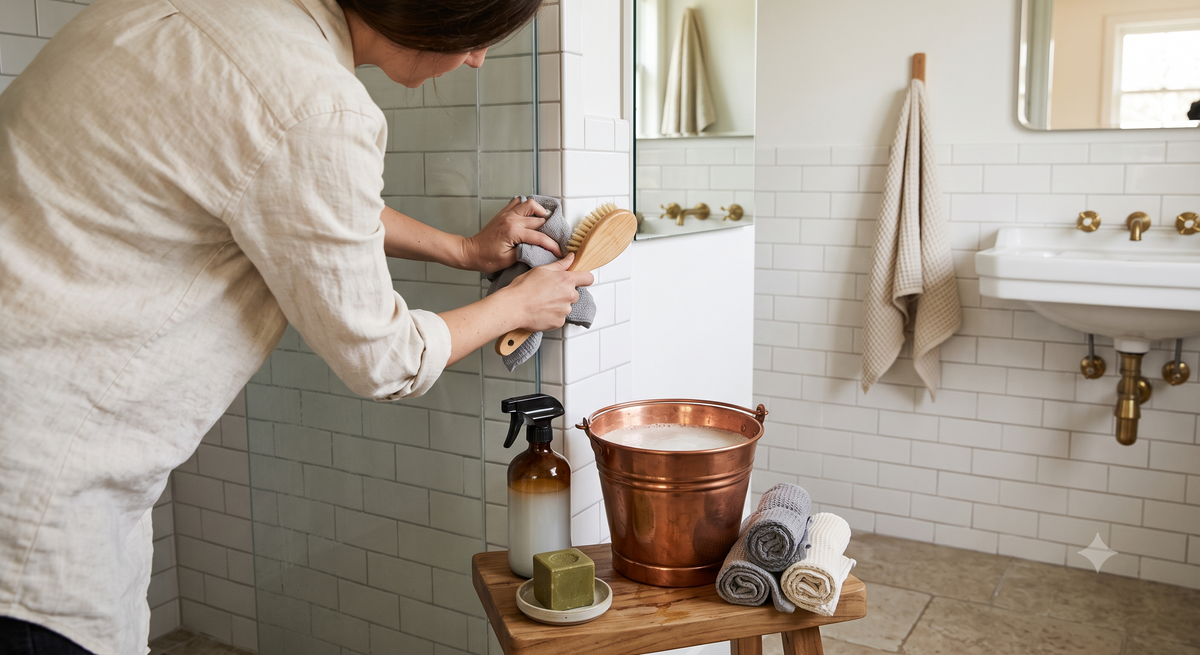
Spring cleaning gets all the attention, but fall deserves its own deep clean, and arguably needs one more. Summer brings months of extra shower use, sunscreen residue, sandy feet, and open windows letting in dust and pollen — by the time September rolls around, a bathroom that’s had a busy summer is genuinely due for more than a weekly wipe-down. Fall is also when a lot of households naturally start nesting indoors again, which makes it a good moment to reset the room before months of heavier indoor time ahead.
Most deep-clean checklists lean hard on disposable products — magic erasers, one-use scrubbing pads, throwaway microfiber cloths sold in bulk packs. This is a room-by-room version built around the same durable, plastic-free tools already worth having in a well-stocked bathroom, so a genuinely thorough fall clean doesn’t have to generate a pile of trash to get there.
Why Fall Specifically Calls for a Deeper Reset
A bathroom accumulates a specific kind of wear over a summer that a quick weekly clean doesn’t fully address. Sunscreen and body oil residue builds up gradually on surfaces that get touched daily but wiped only lightly. Humidity from more frequent showers creates more opportunity for the kind of moisture buildup that a quick wipe doesn’t reach into corners and crevices. And a bath mat or shower caddy that’s absorbed months of heavier summer use benefits from a proper deep clean before it heads into a season of less air circulation with windows closed.
The Rainforest Alliance and similar sustainability-focused organizations have noted that seasonal reset habits — done consistently rather than only when something looks visibly dirty — tend to reduce overall resource use in a household, since a well-maintained space needs less aggressive cleaning (and fewer disposable products) to bring back into shape than one that’s been neglected for months.
Starting Point: Gather What You Actually Need
A plastic-free deep clean doesn’t require buying an entirely new set of cleaning products — it mostly means reaching for durable tools already suited to bathroom cleaning rather than defaulting to single-use versions out of habit.
A sisal exfoliating glove that’s nearing the end of its life as a body scrub tool still has plenty of scrubbing power left for tackling grime on tile grout or a soap dish — a natural second life that a disposable scrubbing pad never gets. Keep a couple of all-purpose cloths on hand as well, since a genuine room-by-room clean touches far more surfaces than a normal weekly wipe-down covers.
Room-by-Room: The Shower and Tub
Start here, since this is where the heaviest summer buildup tends to live. Take the overhead bamboo shower caddy down entirely and give it a full wipe-down rather than cleaning around it — months of shampoo drips and soap residue collect at the base of a caddy shelf in a way that’s easy to miss during routine cleaning.
Check the bar of charcoal soap sitting in its soap dish too — the lift-dish design is meant to keep a bar draining and drying between uses, but it’s worth giving the dish itself a proper scrub during a deep clean, since residue builds up underneath the lift tray over months of daily use.
Room-by-Room: The Floor
A bamboo bath mat takes more direct daily wear than almost anything else in the room, and a proper fall reset means more than a quick rinse. Give it a full scrub along the slats, where soap scum and skin cells tend to accumulate out of sight, and let it dry completely in open air before returning it to daily use — a step that’s easy to skip in a quick weekly clean but matters more heading into a season with less natural ventilation.
Room-by-Room: Around the Toilet
The toilet brush and stand set itself is worth inspecting during a deep clean, not just used — check that the stand’s base is clean and dry, since this is a spot that collects moisture and rarely gets attention otherwise. While you’re in this part of the room, empty and wipe down the drawer inside the toilet paper holder — dust accumulates in enclosed drawers over months in ways that aren’t obvious until you actually pull them open and look.
Room-by-Room: Walls, Hooks, and Storage
The bamboo wall hook rack holds up well to daily towel use, but a fall deep clean is a good moment to wipe down the wall behind it, where moisture from hanging wet towels tends to collect over a busy summer season. If your bathroom includes a bamboo foot stool for reaching the sink, give it a full wipe-down and check the underside, which collects dust that a standing surface doesn’t show at a glance.
Room-by-Room: Textiles and Linens
Bathroom textiles need attention during a deep clean that goes beyond a normal laundry cycle. Bath towels and mats that see heavy summer use benefit from an extra rinse cycle to fully clear detergent buildup, and a set of wool dryer balls helps towels dry fully and stay soft without the synthetic fragrance layer that dryer sheets leave behind — residue that can actually reduce a towel’s absorbency over repeated washes.
If your household has smaller bathroom linens — washcloths, hand towels, a bath mat cover — an organic cotton delicate bag keeps them from getting tangled or worn thin during a deep-clean laundry cycle that’s likely running hotter or longer than a normal weekly wash. And if you’re tackling a larger batch of bathroom linens all at once, an XL laundry bag makes it easy to transport a full deep-clean load to the laundry room in one trip rather than several.
The Full Fall Bathroom Deep-Clean Checklist
- Remove and fully wipe down the shower caddy, including underneath each shelf
- Deep-scrub the soap dish, including underneath the lift tray
- Scrub the bath mat along every slat and let it air dry completely before returning it to use
- Inspect and clean the toilet brush stand base
- Empty, wipe down, and restock the toilet paper holder drawer
- Wipe the wall behind the hook rack and check the underside of any foot stool or step surface
- Run a deep-clean laundry cycle on bath towels and mats, using dryer balls instead of dryer sheets
- Use a mesh or delicate bag for smaller linens washed in the same load
None of this needs to happen in a single afternoon. Spreading these steps across a weekend, tackling one or two rooms per day, makes the whole project far more manageable than trying to power through the entire bathroom at once. Eco-Cycle frames this kind of routine seasonal maintenance as one of the simplest ways a household reduces overall waste — not through one big dramatic change, but through consistent habits that keep durable goods performing well instead of prematurely wearing out and needing early replacement.
Why Bamboo Fixtures Make This Reset Easier Every Year
A deep clean is also a good moment to notice how well your existing fixtures have actually held up. This is exactly where solid bamboo earns its reputation over synthetic alternatives — a well-finished bamboo piece resists the kind of moisture staining and cloudy discoloration that plastic bathroom fixtures tend to show after a summer of heavy use, which means a fall deep clean restores it to looking genuinely fresh rather than merely less dirty.
It’s also worth remembering, while scrubbing a bath mat or shower caddy back into shape, that this entire process is part of what makes these fixtures last for years rather than a single season. Unlike plastic, which the Plastic Pollution Coalition notes persists indefinitely once discarded, a well-maintained solid bamboo fixture simply keeps performing well through repeated seasonal cleanings, rather than degrading toward an eventual replacement the way many synthetic bathroom products do.
A Few Myths About Plastic-Free Deep Cleaning
“A real deep clean requires disposable wipes and scrubbing pads.” Durable tools like a sisal glove or a reusable cloth handle the same scrubbing tasks as disposable versions, and they’re ready to use again for the next deep clean rather than thrown away after one use.
“Bamboo fixtures need special cleaning products to maintain their finish.” A basic scrub with mild soap and water is usually all a bamboo bathroom fixture needs — harsh chemical cleaners are more likely to strip a natural finish than a gentle, thorough hand clean.
“Fall cleaning is less important than spring cleaning.” A bathroom coming out of a heavy summer of use often needs a deep clean more urgently than one coming out of a quieter winter — the timing of a seasonal reset matters less than actually doing it consistently.
“Dryer sheets are necessary to get towels properly soft after a deep-clean wash.” Wool dryer balls achieve the same softening result without the synthetic residue that dryer sheets leave on absorbent fabric, and they’re reused for hundreds of loads instead of thrown away after one.
“Deep cleaning a bathroom takes an entire weekend no matter what.” Spreading the checklist across a few shorter sessions — the shower one day, textiles another — is just as effective as one long marathon session, and considerably easier to actually follow through on.
Frequently Asked Questions
How often should a full bathroom deep clean actually happen? Twice a year — once heading into fall and once in spring — covers most households well, with lighter weekly cleaning handling maintenance in between.
What’s the biggest difference between a weekly clean and this deep-clean checklist? A weekly clean handles visible surfaces; a deep clean gets into the spots that only need attention every few months — underneath a caddy shelf, inside a drawer, behind a wall hook rack.
Can I do this deep clean without buying anything new? In most cases, yes — the checklist relies on tools most plastic-free bathrooms already have, like a sisal glove or a reusable cloth, rather than requiring new purchases.
Is it safe to deep-clean bamboo fixtures with regular soap and water? Yes — mild soap and water is generally the safest and most effective way to clean solid bamboo fixtures without stripping their natural finish.
How do I keep the bath mat from staying damp after a deep scrub? Let it air dry fully, ideally standing on its edge with good airflow around it, before returning it to daily use — this matters even more heading into a season with windows closed more often.
Should I replace bathroom textiles instead of deep cleaning them? Not usually — a proper deep-clean wash with an extra rinse cycle and dryer balls typically restores towels and mats without needing to replace them, unless they’re already significantly worn.
What if my bathroom is small — does the full checklist still apply? Yes — a smaller bathroom actually tends to take less total time to deep clean, since there’s simply less surface area to cover, even though the same checklist items apply.
Does this deep clean routine work for a guest bathroom too? Yes, and it’s arguably more important there — a guest bathroom that sits mostly idle benefits from the same seasonal reset, especially heading into a busier fall hosting season.
A thorough fall bathroom deep clean doesn’t have to mean a stack of disposable wipes and scrubbing pads on their way to the trash by the end of the weekend. The same durable, reusable tools that handle daily bathroom use also handle the deeper seasonal reset — which means the whole project leaves the room cleaner without leaving behind a pile of single-use waste to show for it.
🌿 Continue Your Journey
Enjoyed this article? Here are three ways to take the next step:
🌱 Make The Bamboo Switch™ Learn how one small change can create lasting impact.
🌎 Made The Bamboo Switch™ Join a growing community choosing progress over perfection.
🤝 Become a Bamboo Switch Guide Help others discover thoughtful, sustainable living while earning rewards.
Share:
Why Natural Fiber Wins: A Deep Dive Into Bamboo vs. Synthetic Materials
Coffee & Tea Rituals for Cooler Mornings