
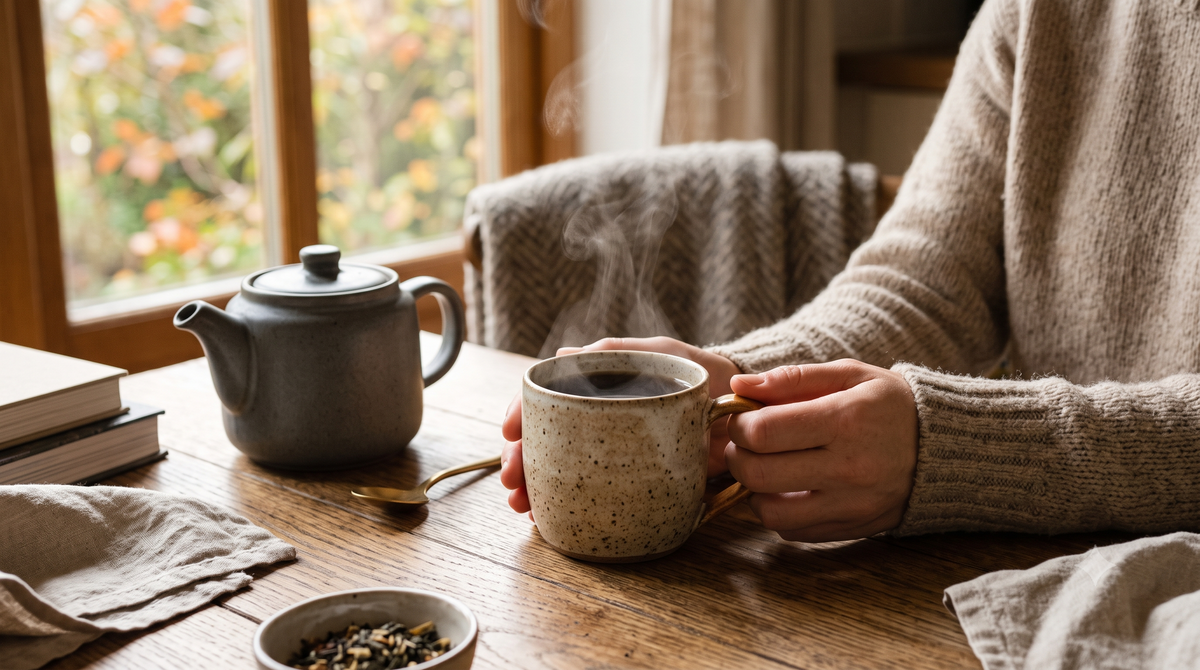
There’s a specific point every fall when a morning routine shifts without anyone deciding to change it. The iced coffee stops making sense. The kitchen window that stayed cracked open all summer gets shut. Coffee starts getting made a few minutes earlier, mostly because it’s nice to stand near something warm before the day actually starts. Cooler mornings have a way of turning a purely functional caffeine habit into something closer to an actual ritual — and that shift is a good moment to look at what that ritual is actually built around.
A lot of coffee and tea routines lean on convenience in ways that quietly generate waste — a disposable filter here, a plastic stir stick there, a paper cup grabbed on the way out the door even when there was time to make something at home. None of that is necessary to get through a cool morning. A slower, more intentional ritual built around a handful of durable tools tends to be both more pleasant and less wasteful than the rushed, disposable version most of us default to.
Why Cooler Weather Changes the Ritual Itself
Coffee and tea in warm months tend to be about speed — something cold, something fast, something that doesn’t require standing near a stove. Once mornings turn cooler, the whole experience naturally slows down. A hot drink takes a few extra minutes to prepare properly, and those minutes start to feel less like friction and more like the actual point of the routine.
This is exactly the seasonal window where switching from rushed, disposable habits to slower, reusable ones tends to stick. Nobody wants to rework their entire morning during the busiest part of summer, but a slightly slower fall pace makes room for a few extra minutes with a proper brewing method, rather than whatever’s fastest.
Building a Better Coffee Ritual
The French press. A bamboo French press is well suited to exactly this seasonal shift — it takes a few extra minutes compared to a drip machine or a pod system, and those minutes are part of what makes a cooler morning feel unhurried rather than rushed. It also skips the paper filters and, more significantly, the single-use plastic pods that a lot of households go through by the dozen every week without much thought.
Stirring and serving. A bamboo long stir spoon replaces the plastic stir sticks that come free with to-go coffee but end up in a landfill within minutes of use. At home, it does the same job for years instead of once.
On the go. A coffee clip spoon clips directly onto a bag of coffee grounds, combining a scoop and a bag clip in one piece — a small detail, but one that replaces both a separate plastic scoop and a plastic bag clip with a single reusable tool.
Holding the mug. As mornings cool down, a bamboo coffee cup holder gives a hot mug some insulation from the hand, which matters more once a mug is actually hot enough to be uncomfortable to hold directly — a distinctly fall-morning problem that doesn’t come up nearly as often in July.
Building a Better Tea Ritual
Tea has its own set of small rituals that tend to lean on disposable materials without much scrutiny — individually wrapped tea bags, plastic-lined packaging, a stir stick used once and tossed.
Brewing loose leaf. A tea strainer makes loose-leaf tea just as convenient as a bag, without the fine plastic mesh that a surprising number of “paper” tea bags actually contain, according to reporting the Plastic Pollution Coalition has highlighted around single-use tea bag construction.
Matcha, specifically. If your cooler-morning ritual leans toward matcha rather than steeped tea, a matcha whisk paired with a porcelain matcha whisk holder keeps the whole process contained to a couple of durable tools rather than disposable whisking sticks. A matcha scraper makes measuring out the right amount of powder simple and mess-free, without needing a disposable measuring scoop that usually comes packaged in plastic.
Sweetening naturally. A cooler-morning cup of tea often calls for a bit of sweetness, and a honey dipper handles that without the plastic squeeze bottle most honey comes packaged in at the grocery store — a small swap, but one that adds up across a whole season of tea drinking.
Setting the table. Whether it’s coffee or tea, a bamboo tea coaster holder or a woven coaster set protects a table or counter from the ring a hot mug leaves behind — a detail that matters more once mugs start staying full and hot for longer stretches during a slower fall morning.
A Note on Sharing the Ritual With Kids or Housemates
A cooler-morning coffee or tea ritual doesn’t have to be a solo habit. Plenty of households use the slower fall pace as a chance to bring kids into part of the routine — measuring loose-leaf tea into a strainer, or helping set out mugs and a coaster set before everyone sits down. None of this requires handing a child anything sharp or hot; the prep work around a ritual (measuring, setting the table, choosing a mug) is just as much a part of it as the brewing itself, and it’s a small, repeatable task that fits naturally into a slower fall morning routine the same way a bedtime routine does at the other end of the day.
Housemates and partners tend to fall into a rhythm around a shared ritual too, once there’s an actual reason to linger at the counter for a few minutes rather than each grabbing coffee separately on the way out the door. A French press that makes enough for two cups practically invites that kind of shared moment in a way a single-serve pod machine never quite does.
Why a Slower Ritual Is Worth Protecting
It’s easy to treat a morning coffee or tea routine as pure function — caffeine delivery, nothing more. But a slower, more intentional version of the same routine tends to change how the rest of the morning goes, not just how the drink tastes. Standing at the counter for the few extra minutes a French press or a properly steeped tea takes creates a small, built-in pause before the day’s actual demands start — something a pod machine or a grabbed paper cup skips entirely.
There’s also a genuinely practical sustainability case underneath the ritual itself. According to the American Bamboo Society, bamboo reaches full maturity in as little as three to five years, compared to decades for the hardwoods used in some traditional kitchen tools — which means a bamboo-based coffee and tea setup carries a genuinely lighter material footprint from the very start, well before you get to the waste avoided by skipping pods, filters, and plastic stir sticks.
Making the Ritual a Weekend Thing, Not Just a Weekday One
Weekday mornings are often rushed no matter the season, but weekend mornings in fall have a different texture entirely — slower, often shared with a partner or family, sometimes stretched out over a second cup. This is where a coffee or tea ritual can genuinely expand rather than just persist. A kitchen serving set isn’t just for meals — it works well for setting out a small fall breakfast spread alongside a French press of coffee on a weekend morning when there’s actually time to sit down together.
Eco-Cycle frames small, consistent swaps like these — a reusable filter instead of a paper one, a durable stir spoon instead of a plastic stick — as the kind of everyday habit that adds up to meaningfully less household waste over a year, without requiring any single dramatic change. It’s also worth using a slower fall weekend to reset the tools themselves — giving a French press a proper deep clean, wiping down a coffee cup holder, checking that a matcha whisk holder is holding its shape properly after a summer of daily use. A well-maintained set of tools tends to make the daily ritual feel better maintained too, in a way that’s easy to lose track of during a rushed work week.
A Few Myths About Sustainable Coffee and Tea Rituals
“A French press takes too long for a normal weekday morning.” It adds a few minutes over a pod machine, but those minutes are often exactly what a slower fall morning has room for — and weekday routines can shift gradually rather than all at once.
“Loose-leaf tea is more complicated than bags.” A tea strainer makes loose leaf just as simple as a bag, with the added benefit of skipping the fine plastic mesh some tea bags are actually made from.
“Matcha requires special equipment that’s hard to maintain.” A whisk, a holder, and a scraper cover the entire process, and all three are simple to clean and built to last for years of regular use.
“Reusable coffee and tea tools cost more than disposable versions over time.” The opposite tends to be true — a durable French press or tea strainer is a one-time purchase, while pods, bags, and disposable stir sticks are a recurring cost that adds up every week.
“A slower ritual is really just about the drink itself.” The pause built into a slower coffee or tea routine tends to matter as much as the drink — it’s less about the extra brewing time and more about the few unhurried minutes that time creates before the day starts.
Frequently Asked Questions
Is a bamboo French press harder to clean than a glass one? No — cleaning involves removing the used grounds and rinsing the mesh plunger, the same basic process as any French press, regardless of the housing material.
How long does bamboo coffee and tea equipment typically last? With basic care — hand-washing and drying rather than dishwasher cycles — well-made bamboo kitchen tools typically last for years of regular daily use.
What’s the easiest first swap for someone used to a pod coffee machine? Starting with a French press for weekend mornings, when there’s more time to enjoy the slower process, tends to be an easier transition than switching every single weekday morning all at once.
Do I need special tea to use a strainer instead of bags? No — most loose-leaf teas work in a basic strainer, and many tea shops sell loose leaf in the same varieties commonly found in bagged form.
Is matcha harder to prepare than regular steeped tea? It has a few more steps — measuring, whisking — but a whisk, holder, and scraper simplify the process enough that it becomes routine within a few mornings of practice.
Why does a coffee cup holder matter more in fall than summer? Hot mugs in cooler months tend to stay noticeably hotter for longer, since the surrounding air isn’t already warm, which makes a holder more genuinely useful for comfortable handling.
Can this kind of ritual work for a household with more than one coffee or tea drinker? Yes — a French press and a kitchen serving set both scale well for sharing a slower weekend morning with a partner, family, or guests staying over for the weekend.
Does switching to these tools actually reduce meaningful waste, or is it mostly symbolic? It’s genuinely meaningful at scale — a household using pods, paper filters, and plastic tea bags daily accumulates a significant amount of single-use waste over a year, all of which a reusable French press, strainer, and stir spoon simply avoid generating in the first place.
Cooler mornings have a way of asking for a slightly slower version of a routine most of us run on autopilot the rest of the year. Building that slower version around a handful of durable, reusable tools means the ritual gets better at the exact same time it gets a little lighter on waste — which is really the whole point of a fall morning worth actually looking forward to.
🌿 Continue Your Journey
Enjoyed this article? Here are three ways to take the next step:
🌱 Make The Bamboo Switch™ Learn how one small change can create lasting impact.
🌎 Made The Bamboo Switch™ Join a growing community choosing progress over perfection.
🤝 Become a Bamboo Switch Guide Help others discover thoughtful, sustainable living while earning rewards.
Share:
Fall Cleaning, Without the Plastic: A Room-by-Room Bathroom Deep Clean
The Family Bathroom Cabinet: Building a Shared Plastic-Free Routine for Every Age