
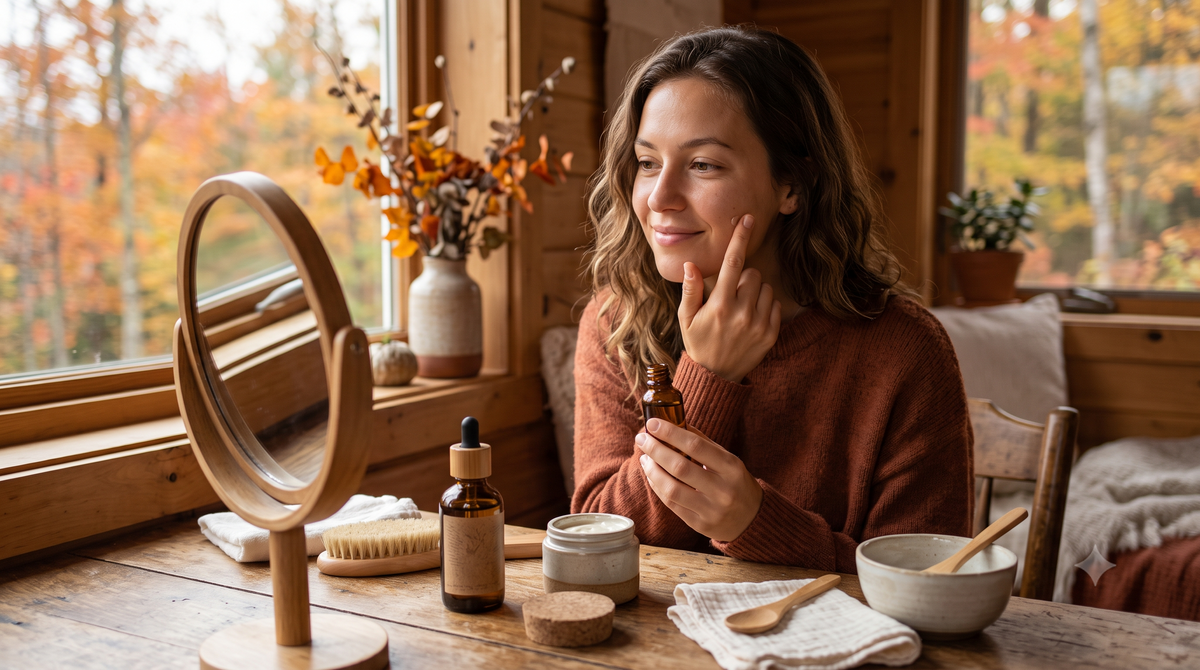
Somewhere between the first week of cooler mornings and the first time you reach for a sweater without thinking about it, your skin has already started reacting to the season change — usually before you consciously notice it yourself. Tightness after a shower, hair that seems to have more static or frizz depending on the day, lips that chap faster than they did in August. None of this is random. It’s a direct response to falling humidity and cooler air, and it means the personal care routine that worked all summer may need a few real adjustments, not just a new scent for the season.
This guide walks through what actually changes for skin and hair as the weather shifts, and how to adjust a personal care routine to match — without overhauling everything you already own. Most of the fixes are less about buying more products and more about changing how and how often you use the ones already sitting on your counter.
Why Cooler Weather Actually Changes Your Skin
The biggest shift from summer to fall isn’t temperature — it’s humidity. Warm summer air holds significantly more moisture than cool fall air, and skin loses hydration to its surrounding environment faster in low-humidity conditions. That’s the core mechanism behind the tight, dry, sometimes flaky feeling that shows up on hands, faces, and especially lips as the weather turns, even before winter’s colder temperatures arrive.
Indoor heating compounds the problem once it kicks on for the season. Heated indoor air is typically drier than outdoor air in the same conditions, which means the environment inside your home during a cool fall evening can actually be more dehydrating for skin than a walk outside. This is part of why dry-skin complaints tend to climb steadily from early fall through winter, rather than waiting for the coldest months to appear.
Adjusting Your Bathing and Cleansing Routine
Hot showers feel especially good once the air turns cool, but hot water strips natural oils from skin faster than warm water does — a trade-off that matters more in fall and winter, when skin is already losing moisture to dry air. Shortening shower time slightly and easing off the water temperature by a few degrees is a small change that adds up over a season.
This is also a good moment to reconsider what you’re using to cleanse with. An all-natural loofah sponge is naturally gentler and more breathable than a synthetic puff, which matters when skin is already more sensitive to friction and drying agents than it was in the middle of summer. A sisal exfoliating glove can still play a role in a fall routine, but it’s worth using it a little less frequently than in summer, since over-exfoliating already-dry skin tends to make flakiness worse rather than better.
Bar soap choice matters here too. A charcoal shampoo bar formulated for scalp balance is worth keeping in rotation through fall, but pay attention to how your scalp responds — if it starts feeling tight or flaky, that’s a sign to cut back frequency rather than switch products entirely. Storing bar soap in a sisal soap bag between uses also helps it last longer, since proper drying between uses prevents a bar from softening and wearing down faster than it should.
Hair Care for Drier, Cooler Air
Static and frizz that seem to appear out of nowhere in October and November are almost always a humidity story, not a hair-quality one. Low-humidity air increases static electricity in hair, and a scalp that’s producing less oil in response to cooler weather can leave strands feeling drier and more prone to flyaways than they were in the summer months.
A bamboo paddle hair brush is worth using slightly differently as the season changes — a few extra strokes from root to tip helps distribute natural scalp oils down the length of hair, which does more for dryness and static than most leave-in products alone. Bamboo bristles also generate less static friction against hair than many plastic bristles, which is a small but real advantage during the driest months of the year.
Washing frequency is worth revisiting too. Hair that felt oily enough to wash daily in summer heat often needs washing less often once cooler weather and lower humidity reduce oil production — over-washing in fall can actually strip the scalp and make dryness worse, creating a cycle that’s easy to mistake for “just how my hair is now.”
Oral Care Doesn’t Take a Season Off
It’s easy to let oral care habits slide as routines shift with the season, but cooler weather doesn’t change how bacteria and plaque build up. A bamboo toothbrush replaced roughly every three months stays effective regardless of the season, and keeping it upright on a bamboo toothbrush holder helps it air-dry fully between uses — a detail that matters more once cooler, damper mornings make bathroom counters feel a little less dry overall.
Flossing habits are worth a fall check-in too. Organic bamboo floss or a bamboo floss refill pack for an existing dispenser makes it easy to keep the habit going without a gap in supply as the season turns and routines get busier with school schedules and shorter days. If chapped, dry lips have you reaching for lip balm more often, a tooth tablet refill pack is a good complement for anyone simplifying their bathroom counter as part of a broader seasonal reset.
Small Details That Matter More in Fall
Ear care is one of those routines that rarely gets a second thought until dry air makes it more noticeable. Bamboo cotton ear buds are a simple daily-use item worth keeping stocked, especially since a reusable, biodegradable option means one less small plastic item heading to a landfill every time a routine repeats — a category the Plastic Pollution Coalition flags as a surprisingly large source of everyday bathroom waste, precisely because single-use swabs are so small they rarely register as a problem.
Skincare application order also matters more once the air turns dry. A bamboo facial rounds holder keeps reusable rounds within easy reach for toner or micellar water application — useful for anyone adding a hydrating toner step to their routine as the weather cools, since that extra layer of moisture matters more now than it did during a humid August.
Building a Simple Fall Routine, Step by Step
A full seasonal overhaul isn’t necessary — a few consistent adjustments cover most of what changes. Start by shortening shower time and lowering water temperature slightly. Follow with a gentler cleansing tool, easing off heavy exfoliation for a few weeks while skin adjusts. Add a few extra brush strokes to hair care to help distribute natural oils, and reduce wash frequency if hair feels less oily than it did in summer. Keep oral care consistent regardless of season, and layer in a hydrating step, like a toner, if dryness becomes noticeable on the face specifically.
None of these changes require replacing an entire routine — they’re mostly about adjusting frequency and technique with the tools already in a bathroom, plus a few small additions where dryness shows up most. That distinction matters beyond convenience: the Story of Stuff Project has long pointed out how easily “new season, new products” marketing pushes people toward buying more than they actually need, when a few adjustments to existing habits usually solve the underlying problem just as well.
What to Look for When Building a Fall Personal Care Routine
Materials that don’t add irritation. A natural loofah or sisal glove is inherently gentler on already-sensitized skin than some synthetic exfoliating tools, which matters more once skin is drier and more reactive to friction.
Tools that support, rather than fight, natural oils. A bamboo brush that distributes oil down the hair shaft works with the way hair naturally hydrates itself, rather than relying entirely on added products.
Consistency over intensity. A daily oral care routine and a simple, repeatable cleansing routine matter more through a season change than an occasional intensive treatment.
Reusable, refillable basics. Refill packs for floss and tooth tablets make it easy to keep a routine going without a supply gap right as schedules get busier with the change of season — a small habit that Eco-Cycle consistently highlights as one of the easiest, lowest-effort forms of zero-waste living, precisely because it doesn’t require behavior change, just a different refill in the same dispenser.
A Few Myths About Fall Skin and Hair Care
“Dry skin in fall means I need completely different products.” Usually not — most fall dryness responds to adjusting frequency and technique with what you already own, like shorter, cooler showers and gentler exfoliation, rather than an entirely new product lineup.
“If my hair feels less oily, I should wash it just as often out of habit.” Reduced oil production in cooler weather is a real signal to wash less often, not more — over-washing dry-season hair tends to strip natural oils and worsen the very dryness you’re trying to fix.
“Static in my hair means my hairbrush is the problem.” Static is primarily a humidity issue, not a brush-quality issue — a bamboo brush actually reduces the static-generating friction that some plastic bristles create, though it can’t eliminate a low-humidity environment entirely.
“Exfoliating more often helps flaky, dry skin.” Over-exfoliating already-dry skin frequently worsens flakiness by removing more of the skin’s natural barrier — easing off exfoliation frequency during dry months is usually the better move.
“Oral care habits can slide a little once summer routines end.” Plaque and bacteria don’t take a seasonal break — a consistent brushing and flossing routine matters exactly as much in October as it does in July.
“Indoor heating doesn’t affect skin the way outdoor cold does.” Indoor heated air is often drier than outdoor air, which means time spent inside during fall and winter can be just as dehydrating for skin as time spent outside in the cold.
Frequently Asked Questions
Why does my skin feel tighter in fall even before it gets cold? Falling humidity, not falling temperature, is usually the main driver — drier air pulls moisture from skin faster than the humid air of summer does, and that shift often starts well before the weather feels genuinely cold.
Should I switch to a heavier moisturizer for fall? Many people benefit from a slightly richer moisturizer as humidity drops, but the bigger factor is often reducing water temperature and shower length, which limits how much natural oil gets stripped away in the first place.
How often should I replace my bamboo toothbrush? Roughly every three months, regardless of season — bristle wear and effectiveness follow a consistent timeline that isn’t affected by weather.
Why does my hair seem more static-prone in fall and winter? Lower humidity increases static electricity buildup in hair, and reduced natural scalp oil production in cooler weather can leave strands more prone to flyaways and friction.
Is it normal to wash my hair less often once the weather cools? Yes — many people naturally need to wash less often as oil production slows with cooler, less humid weather, and adjusting frequency down usually helps rather than hurts hair health.
Do I need a separate exfoliating routine for fall? Not a separate routine, necessarily — just a lighter touch. Reducing frequency with the same tools, like a loofah or exfoliating glove, is usually enough to prevent over-exfoliating already-drier skin.
Can a reusable ear bud really replace disposable cotton swabs long-term? Yes — a reusable bamboo ear bud is designed to be cleaned and reused rather than discarded after a single use, which meaningfully cuts down on small plastic waste over the course of a year.
Is it worth adding a facial toner step just for fall? If dryness is noticeable on the face specifically, an added hydrating step like toner can help — though it’s worth introducing gradually rather than layering on several new products at once.
Cooler weather doesn’t require a complete personal care overhaul so much as a handful of thoughtful adjustments to routines that already work. Paying attention to how skin, hair, and scalp respond as the season changes — and adjusting frequency and technique before reaching for new products — tends to solve most of what fall weather throws at a bathroom counter. From there, it’s mostly a matter of keeping the basics consistent and letting the small, repeatable habits do the work.
🌿 Continue Your Journey
Enjoyed this article? Here are three ways to take the next step:
🌱 Make The Bamboo Switch™ Learn how one small change can create lasting impact.
🌎 Made The Bamboo Switch™ Join a growing community choosing progress over perfection.
🤝 Become a Bamboo Switch Guide Help others discover thoughtful, sustainable living while earning rewards.
Share:
Pumpkin Carving Kitchen Kit: Bamboo Tools for Fall Kitchen Traditions