
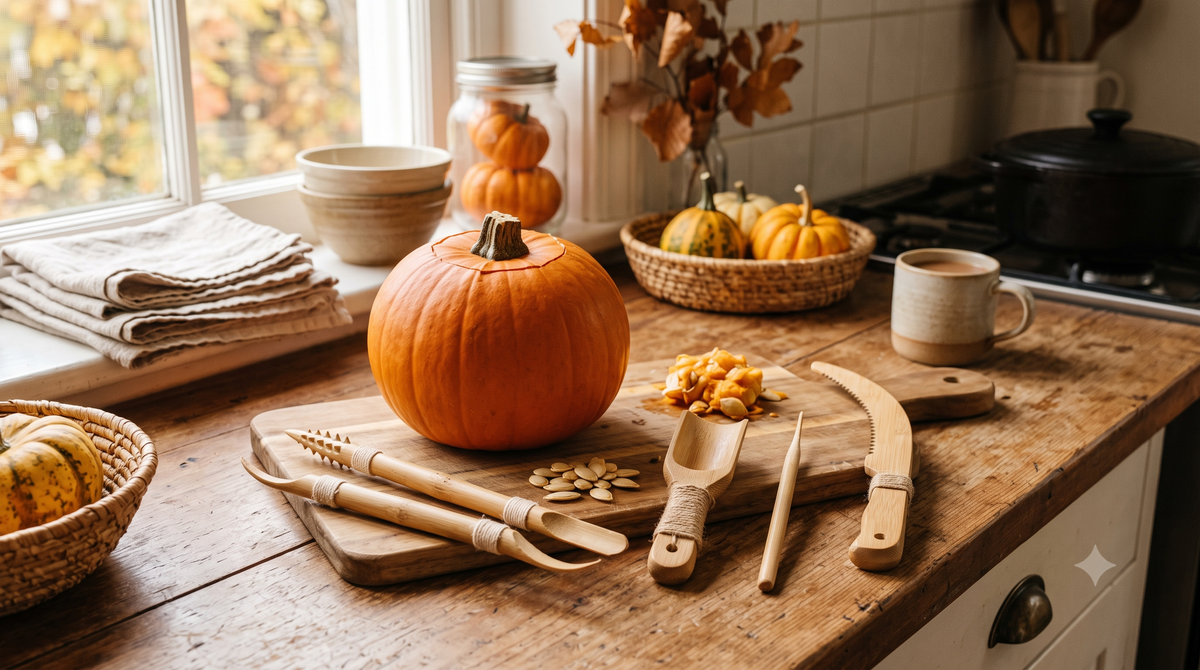
Pumpkin carving night has a particular kind of chaos to it. Newspaper or a plastic tablecloth spread across the counter, pumpkin guts everywhere, kids arguing over who gets to scoop first, and — if the night goes well — a tray of roasted seeds coming out of the oven an hour later as the reward for all that mess. It’s one of the most reliably fun fall traditions a family has, and it’s also one of the messiest kitchen events of the entire season.
Most households handle that mess with a familiar lineup: disposable tablecloths, cheap plastic carving kits that snap on the second pumpkin, and single-use tools that get thrown out the moment the seeds are in the oven. None of that is necessary. A Kitchen Essentials collection of durable tools handles pumpkin carving night — and the roasted-seed tradition that follows it — better than a one-time plastic kit, and it’s still in the kitchen drawer for Thanksgiving prep a few weeks later.
Why Pumpkin Carving Night Is Harder on a Kitchen Than It Looks
Pumpkin carving isn’t really one task — it’s several, back to back. There’s the initial cutting and gutting, which needs a stable surface and tools that won’t slip on wet, stringy pumpkin flesh. There’s the separating of seeds from pulp, which is inevitably the messiest part of the whole night. And if roasted seeds are part of the tradition, there’s a second round of prep entirely — rinsing, drying, seasoning, and getting a tray into the oven while everyone’s still excited about the carved pumpkin sitting on the porch.
Each of those stages benefits from having the right tool already on hand, rather than improvising with whatever’s in the drawer. A dull kitchen knife or a flimsy plastic scoop that comes with most store-bought carving kits turns twenty minutes of fun into an hour of frustration, especially with kids involved who are eager to help but need tools that are actually manageable for smaller hands.
Setting Up the Carving Station
A stable, sizable cutting surface is the foundation of a good carving setup. A 16-inch bamboo cutting board with handle gives enough room to lay a pumpkin top down for cutting the lid, and the handle makes it easy to carry a board covered in pumpkin pulp straight to the sink or trash without a mid-carry spill. For a bigger gathering — a pumpkin-carving party with multiple pumpkins going at once — a square charcuterie board with utensil drawer doubles as a staging surface, with the drawer keeping smaller tools like a paring knife corralled instead of sliding around in the mess.
For scooping out seeds and pulp, a 4-piece bamboo kitchen utensil set includes sturdy spoons that handle the job better than the thin plastic scoop that usually comes bundled with a store-bought carving kit — and unlike that plastic scoop, a solid bamboo spoon isn’t going anywhere after one use.
From Pulp to Roasted Seeds
Once the seeds are separated from the pulp, rinsing and drying them properly makes a real difference in how evenly they roast. A tea strainer works well for a quick rinse of a smaller batch of seeds directly under the tap, catching the seeds while letting pulp and water pass through — a genuinely useful repurposing of a tool most households already have for tea.
Once the seeds are dried and seasoned, a bamboo barbecue grilling tong makes it easy to flip and redistribute seeds partway through roasting, so they brown evenly instead of burning on one side while staying pale on the other. A honey dipper is a small, easy way to add a touch of sweetness to a batch of roasted seeds for anyone who prefers them beyond the standard salt-and-butter approach.
Serving the Results
Once the seeds are out of the oven, how they’re served matters almost as much as how they’re roasted — a bowl of roasted pumpkin seeds passed around the table feels like part of the tradition in a way that eating straight off a baking sheet doesn’t. A woven coaster set gives a serving bowl a proper resting spot on the table without worrying about heat marks, and a kitchen serving set makes portioning warm seeds into individual bowls easier than passing around a single communal spoon.
If pumpkin carving night doubles as a hot cider or cocoa night — which it often does once the sun goes down and the temperature drops — a set of bamboo tea coasters keeps warm mugs from leaving rings on the table while everyone admires the finished pumpkins.
Cleanup That Doesn’t Undo the Fun
The cleanup after pumpkin carving is often what determines whether a family looks forward to the tradition next year or dreads it. Durable tools make a real difference here, mostly because they can go straight into the sink or dishwasher rather than into the trash. A cutting board with a handle is far easier to carry to the sink loaded with pulp and seeds than a flat board without one, and utensils that can be rinsed and reused save a trip to the store for replacement plastic tools before the next pumpkin-related project rolls around — whether that’s a pie for Thanksgiving or another round of carving next October.
This is really where the sustainability case for pumpkin carving night makes itself: a store-bought plastic carving kit is designed to be used once and thrown away, while a kitchen already equipped with sturdy, reusable tools handles the same task with nothing extra to buy and nothing left over to discard. Seasonal single-use products like disposable carving kits are exactly the kind of purchase the Eco-Cycle organization flags as an avoidable spike in household waste tied to a single fall night rather than year-round use.
Making It a Repeatable Family Tradition
The families that keep pumpkin carving night as an annual tradition, rather than a one-off activity that fades out after a couple of years, tend to keep the setup simple and consistent. The same cutting board, the same set of scooping tools, the same roasting routine for the seeds afterward — repetition is part of what makes a tradition feel like a tradition, rather than reinventing the whole process from scratch every October.
Involving kids in age-appropriate parts of the process — scooping seeds with a sturdy spoon, helping season the tray before it goes in the oven — also tends to make the tradition stick longer than treating carving as an adults-only task with kids just watching. A well-stocked, durable kitchen setup makes it easier to hand a kid a proper tool with confidence, rather than worrying about a flimsy plastic one snapping mid-scoop.
What to Look for in Tools for a Pumpkin-Carving Kitchen
Sturdiness for wet, stringy, awkward material. Pumpkin pulp is genuinely messy to work with — a scoop or spoon needs to hold up to scraping against a tough pumpkin wall without bending or cracking, the kind of repeated stress that the American Bamboo Society notes solid bamboo handles well given its favorable strength-to-weight properties.
A cutting surface large enough for a whole pumpkin top. A too-small board makes even the simplest step — cutting the lid — more awkward than it needs to be.
Tools that transition from prep to roasting to serving. The same set of durable kitchen tools should carry a household from gutting the pumpkin through roasting the seeds to serving them at the table, without swapping to disposable versions at any stage.
Dishwasher- or hand-wash-friendly construction. After a messy night, the easier the cleanup, the more likely the tradition survives another year — tools that go straight into the sink beat ones that need special care right when everyone’s ready to be done.
A Few Myths About Sustainable Pumpkin Carving
“Plastic carving kits are necessary for safety, especially with kids.” A properly sized, sturdy kitchen tool is generally safer for kids to use than a flimsy plastic one prone to snapping mid-use — the durability of the tool matters more than the material label.
“Reusable kitchen tools can’t handle something as messy as pumpkin guts.” Solid bamboo utensils and cutting boards are built for the kind of repeated daily kitchen use that’s tougher on tools than one messy night of pumpkin carving.
“Roasting pumpkin seeds requires specialized equipment.” A basic set of kitchen tools — a strainer for rinsing, tongs for turning, a board for prep — covers the entire process from raw seeds to a finished, roasted batch.
“A carving kit only gets used once a year, so it doesn’t matter if it’s disposable.” That’s exactly why durability matters more, not less — a disposable kit purchased annually adds up to real waste over years of the same tradition, a pattern the Plastic Pollution Coalition has highlighted with seasonal single-use plastics generally, while a durable kitchen setup handles it indefinitely.
“Kids can’t safely help with pumpkin prep using real kitchen tools.” With age-appropriate supervision, a sturdy, properly sized spoon or scoop is often easier and safer for a kid to use than a thin plastic tool that can snap or slip.
Frequently Asked Questions
What’s the most important tool for a pumpkin-carving kitchen setup? A stable, sizable cutting board is the foundation — most of the frustration in a rushed carving session comes from an undersized or unstable surface, not the carving tools themselves.
Do I need special tools to roast pumpkin seeds well? No — a basic strainer for rinsing, a sturdy spoon for stirring, and tongs for turning the seeds partway through roasting cover the whole process.
How do I keep kids safely involved in pumpkin prep? Give them age-appropriate tasks with sturdy, properly sized tools — scooping seeds with a solid spoon is generally safer and more manageable than a thin, flimsy scoop that can slip or snap.
Can the same tools used for carving be used for other fall cooking, like Thanksgiving prep? Yes — a durable cutting board and utensil set purchased for pumpkin carving gets just as much use during Thanksgiving prep a few weeks later, rather than sitting unused the rest of the year.
What’s the best way to clean up after a messy pumpkin-carving night? Tools that go straight into the sink or dishwasher, rather than the trash, make cleanup faster — a cutting board with a handle is easier to carry to the sink loaded with pulp than a flat one.
How do I get seeds to roast evenly instead of burning on one side? Turning them partway through roasting with a sturdy set of tongs redistributes the seeds so they brown evenly rather than scorching in one spot.
Is it worth investing in durable tools if we only carve pumpkins once a year? Yes — the same tools used for carving get regular use the rest of the year for everyday cooking, so the investment isn’t limited to a single October night.
What can I do with the roasted seeds beyond a simple salt-and-butter batch? A honey dipper makes it easy to add a light drizzle of sweetness for a different flavor profile, and a proper serving bowl set out on coasters turns the seeds into more of an occasion than a straight-off-the-tray snack.
Setting Up for the Season
Pumpkin carving night doesn’t need a disposable kit to be fun, and it doesn’t need to end with a trash bag full of cracked plastic tools the next morning. A cutting board sized for the job, a set of sturdy utensils that go from scooping to roasting to serving, and tools that clean up in the sink rather than the trash cover everything the tradition actually requires. Set the kitchen up once this way, and it’s ready for pumpkin carving night this year — and for Thanksgiving prep, and the pumpkin carving night after that, and every fall tradition in between.
🌿 Continue Your Journey
Enjoyed this article? Here are three ways to take the next step:
🌱 Make The Bamboo Switch™ Learn how one small change can create lasting impact.
🌎 Made The Bamboo Switch™ Join a growing community choosing progress over perfection.
🤝 Become a Bamboo Switch Guide Help others discover thoughtful, sustainable living while earning rewards.
Share:
Halloween Without the Plastic Haul: A Sustainable Guest Bathroom for Trick-or-Treat Season
Skin Care for Changing Weather: A Personal Care Routine for Fall