
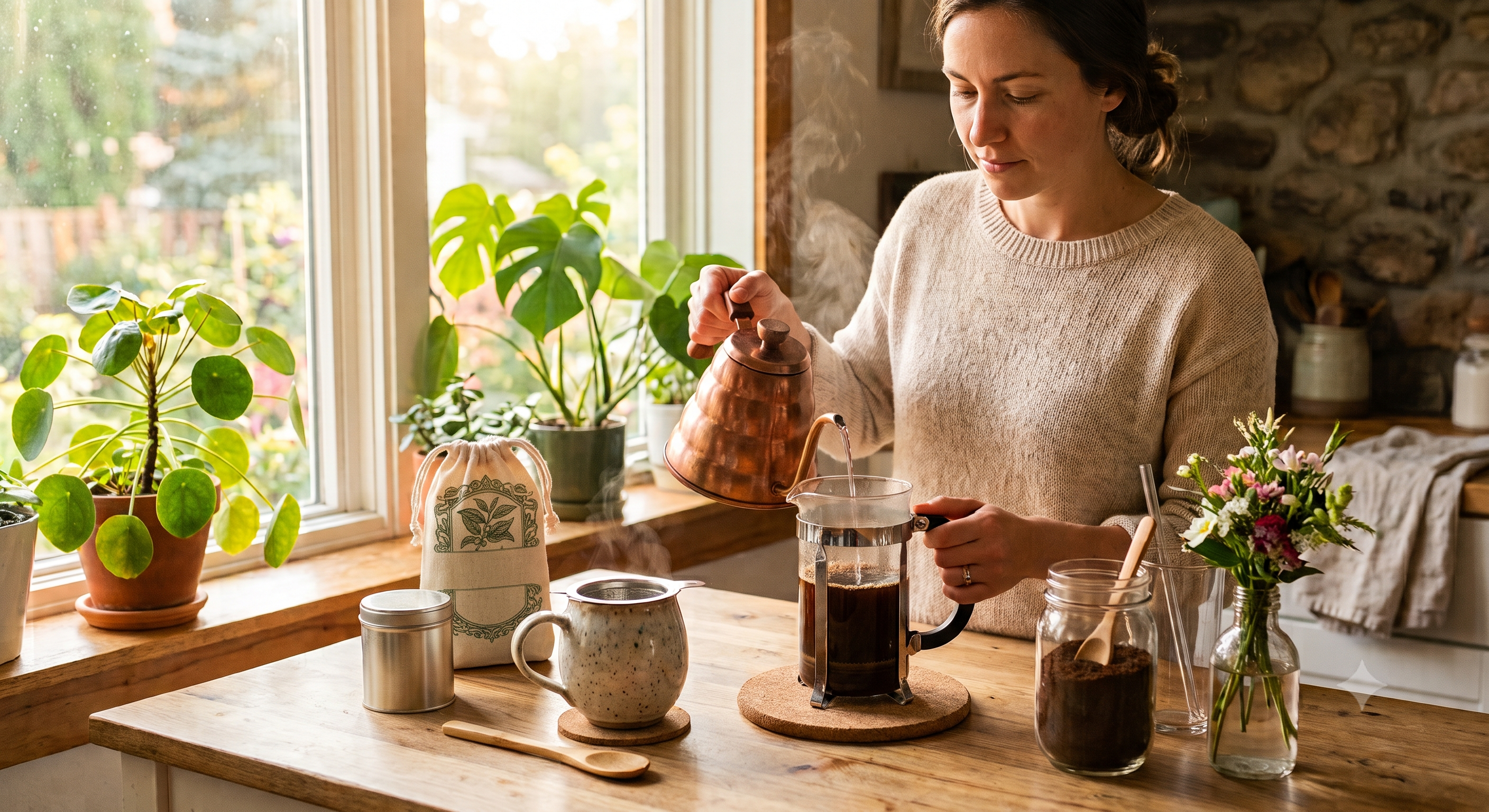
There's a reason the first few minutes of your morning feel sacred. Before the inbox fills up and the day picks up speed, there's usually a kettle, a mug, and a few quiet minutes that belong entirely to you. It's one of the few rituals most of us protect no matter how busy life gets—which makes it one of the best places to start building a more sustainable lifestyle. Not with a dramatic overhaul, but with a handful of small, repeatable choices that make your daily cup feel a little more intentional.
At Bamboo Switch®, we think about sustainability the same way we think about a good cup of coffee: it's built in layers, one habit at a time. This is the first article in our Sustainable Coffee & Tea Ritual series, part of the Bamboo Switch Academy, where we'll be exploring how the small, sensory rituals of coffee and tea can also be some of the lowest-waste habits in your home. Today, we're starting where every good ritual starts: at the counter, with the tools in your hand.
The Hidden Waste in Your Daily Cup
Most of us don't think of our coffee or tea routine as a source of plastic waste, but it adds up faster than it seems. Single-use pods, plastic stir sticks, disposable filters, plastic-lined paper cups, and cheap plastic tea infusers are all designed to be used once and thrown away. According to the Plastic Pollution Coalition, most plastic ever produced still exists in some form today, because it doesn't biodegrade—it just breaks into smaller and smaller pieces that persist in soil and waterways for centuries.
Coffee pods are a particularly stubborn offender. Many are made from a mix of plastic, aluminum, and organic material that's difficult to separate and rarely gets recycled in practice, even when the packaging says otherwise. Plastic stir sticks and stirrers are worse still: they're too small and lightweight for most recycling facilities to sort, so they're routed straight to landfill or, in coastal areas, often end up in waterways. The Ocean Conservancy regularly finds stirrers, straws, and cup lids among the most common items collected during international beach cleanups—small, forgettable objects that outlive the ten minutes it took to enjoy the drink they came with.
None of this is meant to make your morning coffee feel like a guilt trip. It's meant to make one thing clear: this is a ritual you already perform every single day, which means it's also one of the highest-leverage places to make a lasting swap.
Building a Zero-Waste Coffee Bar
If coffee is your ritual, the good news is that a sustainable setup doesn't require replacing your entire routine—just a few key tools that are built to be used for years, not minutes.
Start with your brew method. A bamboo French press skips the paper filters and plastic components of a drip machine entirely, giving you full-bodied, richly extracted coffee with nothing to throw away but the grounds (which, by the way, make excellent compost or garden fertilizer). It's a small shift with a big payoff: no filters to restock, no plastic brew basket to replace every year, and a warmer, more tactile brewing experience than pressing a button on a machine.
Once it's brewed, reach for a bamboo stir spoon instead of a plastic stirrer. It sounds like a minor swap, but multiply it by 365 mornings a year and you've eliminated hundreds of single-use plastic sticks from your life—permanently, with one purchase. Pair it with a bamboo coffee clip scoop, which measures your grounds and clips shut your coffee bag airtight, keeping beans fresher for longer while replacing yet another disposable plastic scoop.
For households that keep more than one mug in rotation, a bamboo coffee cup tree holder keeps your favorite mugs off the counter and within easy reach—small, but it's the kind of detail that makes a kitchen feel more like a ritual space and less like a pit stop. If you're often pouring coffee to-go, a bamboo travel cup means you're never relying on a single-use paper cup with a plastic lid, whether you're headed to the office or out the door for a hike.
None of these swaps ask you to change how you like your coffee. They just ask you to change what it's made and served with.
Slowing Down With a Tea Ritual
If your ritual leans toward tea rather than coffee, the same philosophy applies—arguably even more so, since tea has always been a slower, more deliberate practice.
A stainless steel tea strainer replaces the plastic-mesh, single-use tea bags that many mainstream brands still use (yes, even some "eco" ones—plastic mesh bags are more common than most people realize). Loose-leaf tea steeped in a reusable strainer often produces a fuller, better-tasting cup anyway, without the microplastic content some studies have found leaching from plastic tea bags steeped in hot water.
If matcha is part of your rotation, the ritual itself is worth protecting. A bamboo matcha whisk (chasen) paired with a bamboo chashaku scoop mirrors the traditional Japanese tea ceremony tools that have been used for centuries—long before single-use anything existed. There's something grounding about whisking matcha by hand instead of shaking it in a bottle; it turns two minutes of prep into two minutes of genuine pause.
Bamboo isn't just a sustainable material here, either. Groups like the Rainforest Alliance work directly with tea and coffee farming communities to promote growing practices that protect forests, soil, and water systems, which is part of why we look for suppliers who share that same respect for how ingredients—and the materials we build with—come out of the ground in the first place.
Why Bamboo Is the Right Material for This Particular Ritual
It's worth pausing on why bamboo, specifically, shows up so often in kitchen tools—because it's not just an aesthetic choice. Bamboo is technically a grass, not a tree, and some species can grow several feet in a single day without replanting, without pesticides, and without the decade-plus maturation timeline of hardwood. That makes it one of the fastest-renewing materials available for everyday tools, which matters when you're talking about something you'll use daily for years.
It also happens to be naturally suited to a coffee and tea station specifically. Bamboo has natural antimicrobial properties, meaning it resists the buildup of bacteria and odor better than plastic does over repeated daily use—useful for something that touches hot liquid, oils from coffee grounds, and moisture every single morning. It doesn't retain flavors or odors the way some plastics can after months of use, so your stir spoon won't start tasting faintly like yesterday's dark roast. And unlike plastic, which sheds microplastics as it wears down (especially under repeated exposure to heat, as anyone who's used a plastic stirrer in hot coffee has unknowingly experienced), bamboo wears down the way wood does: slowly, visibly, and without leaching into what you're about to drink.
At the end of its life—likely years down the road, since bamboo kitchen tools are built to last—it's also genuinely biodegradable, unlike plastic tools that will outlive the person who bought them. That "cradle to cradle" quality is part of why bamboo keeps showing up across our full product catalog, not just in the coffee and tea space.
The Real Cost of Convenience
It's easy to assume that single-use convenience is the cheaper option, but it rarely holds up over time. A box of coffee pods or a sleeve of disposable tea bags is a recurring cost, purchased over and over, month after month, for the life of your coffee habit. A well-made bamboo stir spoon, French press, or matcha whisk is a single purchase that keeps performing the same job for years without a subscription, a refill order, or a "buy it again" reminder cluttering your inbox.
The math tends to favor the reusable option within the first few months, and after that, it's pure savings—both for your wallet and for the waste stream. It's a rare case where the more sustainable option and the more economical one are the exact same choice, which is part of why this particular ritual is such an easy place to start.
Hosting: When Your Ritual Becomes a Shared One
Coffee and tea rituals rarely stay solo forever. Eventually there's a guest at the counter, a friend dropping by, or a family gathering around the table, and your setup becomes part of the hospitality.
A woven coaster set or a bamboo tea coaster and holder set protects your table while adding warmth to the table setting—small design touches that guests tend to notice and ask about. It's a low-key way to introduce someone else to the idea that sustainable living doesn't mean sacrificing comfort or style; often, it looks better than the disposable alternative it replaced.
This is also where individual habits start to become collective ones. Every Bamboo Switch® order ships with carbon-neutral shipping, part of our broader Climate Commitment to fund vetted carbon removal projects—so even the act of restocking your coffee bar has a smaller footprint than it did before.
A Simple Week of Sustainable Mornings
If you're not sure where to start, here's a one-week way to ease into the ritual without overhauling your entire kitchen at once:
- Day 1–2: Swap your plastic stir stick or spoon for a bamboo stir spoon. It's the smallest change on this list and the easiest place to build momentum.
- Day 3–4: Retire single-use tea bags or pods in favor of loose-leaf tea and a reusable strainer, or a French press for coffee.
- Day 5: Set up a small coffee or tea station with your new tools somewhere visible, so the ritual feels intentional rather than hidden in a drawer.
- Day 6: Bring a travel cup with you instead of relying on a disposable one, even just once.
- Day 7: Invite someone into the ritual—make tea or coffee for a friend or family member using your new setup, and let the conversation about "where did you get that" happen naturally.
None of these steps require perfection. The point isn't to overhaul your kitchen in a weekend; it's to notice how much easier sustainable habits are to keep when they're built around something you were already doing every day.
Common Questions About a Bamboo Coffee & Tea Setup
Is bamboo dishwasher safe? Generally, no—and this is true of most bamboo kitchen tools, not just ours. Hand-washing with warm water and a mild soap, followed by air-drying upright, keeps bamboo tools performing well for years. It adds about fifteen seconds to your routine, which tends to fit naturally into the slower, more intentional pace this ritual is already asking for.
Will it change the taste of my coffee or tea? No. Properly cared-for bamboo is inert and won't impart flavor the way some plastics can after repeated heat exposure. If anything, brewing methods like a French press or a loose-leaf tea strainer tend to produce a fuller flavor than pod-based or bagged alternatives, simply because they allow more contact between water and the ground coffee or tea leaves.
How long does a bamboo French press or whisk actually last? With basic care—hand-washing, air-drying, and avoiding prolonged soaking—bamboo tools in a coffee or tea station typically last for years of daily use, which is precisely the point: one thoughtful purchase replacing what would otherwise be an ongoing stream of single-use items.
What if I already own a plastic coffee maker or tea infuser? You don't need to replace anything that still works well. The most sustainable option is almost always to use what you already have until it wears out, then choose a longer-lasting replacement. When you're ready to make that next purchase, you'll be in good company—browse stories from others in our Made The Bamboo Switch™ community for a sense of how small swaps like this one add up over time.
A Ritual Worth Protecting
The best sustainable habits aren't the ones that ask the most of you—they're the ones that fit so naturally into your life that you don't notice you're still doing them a year later. Your morning coffee or tea is one of the most repeated rituals you have. Building it around tools made to last, rather than tools made to be thrown away, is a small decision that quietly compounds over time.
This is just the beginning of our Coffee & Tea series here on the blog—next up, we'll be digging into how to host a zero-waste tea gathering and how to store loose-leaf tea and coffee beans for maximum freshness without single-use packaging. For now, take a look at our full Coffee & Tea collection and see which piece fits into your morning first.
🌿 Continue Your Journey
Enjoyed this article? Here are three ways to take the next step:
🌱 Make The Bamboo Switch™ Learn how one small change can create lasting impact.
🌎 Made The Bamboo Switch™ Join a growing community choosing progress over perfection.
🤝 Become a Bamboo Switch Guide Help others discover thoughtful, sustainable living while earning rewards.
Share:
Your Plastic-Free Bathroom, Beautifully Simple
Your Plastic-Free Backyard BBQ Kit