
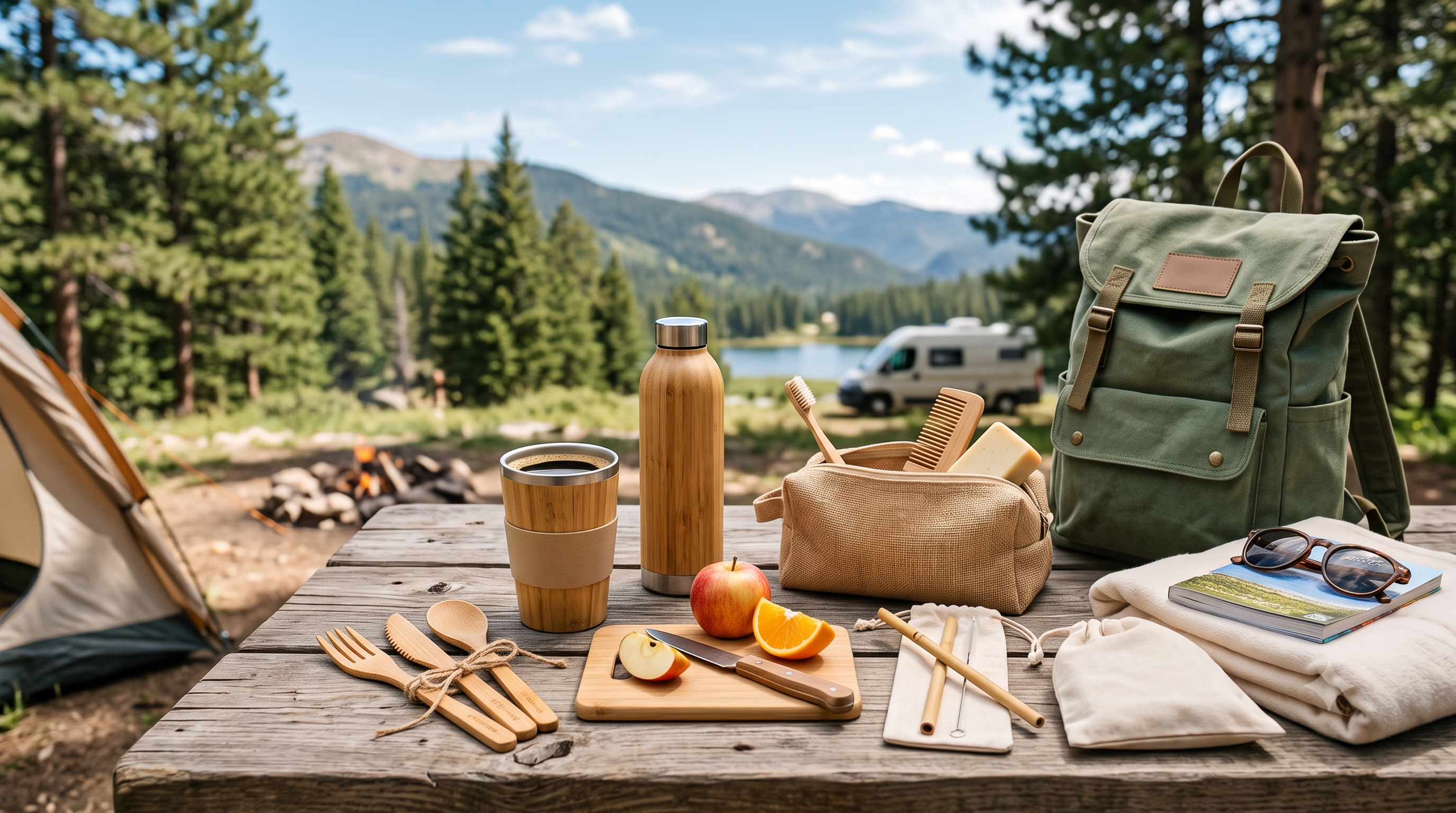
July has a way of pulling everyone outside. The tents come out of the garage, the cooler gets a wipe-down, and somewhere on a group chat, someone is already asking who's bringing the firewood. Whether your summer plans involve a weekend at a state park, a long road trip with the windows down, or just more days spent outside than in, there's one thing most packing lists have in common: an awful lot of single-use plastic quietly riding along for the trip.
This is the first article in our new Plastic-Free Summer Adventures series, part of the Bamboo Switch Academy, where we'll be spending the season exploring how to make outdoor time a little lighter on the planet—without making it any less fun. We're starting with the basics: what actually goes in the bag.
Why Plastic and the Outdoors Don't Mix
There's something a little ironic about heading out to enjoy nature while packing a bag full of the exact material that does the most damage to it. Disposable cutlery, single-use water bottles, plastic straws, and travel-size toiletries in plastic packaging are camping-trip staples for a lot of families, mostly because they're marketed as "convenient" for exactly this kind of trip.
But convenience has a cost once you're actually outside. Litter left at campsites and trailheads doesn't just look bad in photos—it breaks down into microplastics that leach into soil and waterways, and it's frequently mistaken for food by wildlife. The nonprofit Leave No Trace has spent decades studying exactly this problem, and their core principles all point back to the same idea: pack it in, pack it out, and choose gear that doesn't leave a trace once you're gone. A disposable fork left behind by accident doesn't decompose by the next camping season—it's often still there, in pieces, years later.
Organizations like the National Park Foundation work directly with parks to fund cleanup, restoration, and conservation efforts in the very places millions of people camp, hike, and vacation every summer. It's a good reminder that the outdoor spaces we treat as a weekend escape are also fragile, actively-managed ecosystems—worth protecting with the same care we'd want someone else to bring to our own backyard.
Building Your Plastic-Free Camp Kitchen
The easiest place to start swapping out plastic is also the place you'll use the most on any trip: the camp kitchen. A bamboo travel cutlery set covers the basics—fork, knife, spoon—in a compact, durable set that survives being tossed in a cooler bag trip after trip, unlike disposable cutlery that snaps under any real pressure (ask anyone who's tried to cut a grilled sausage with a plastic fork).
For trips where space is tight, a bamboo spork does double duty in a single utensil, which matters more than it sounds like when you're trying to fit a week's worth of gear into one backpack. If you'd rather keep your utensils together and protected, a travel cutlery and cotton pouch set keeps everything clean and contained between meals, and a coconut flatware travel set offers a lightweight alternative made from a byproduct material that would otherwise go to waste.
Traveling with kids changes the math a little, since smaller hands need smaller tools (and are harder to convince to carefully wash and pack away a "grown-up" set). A kids' bamboo travel cutlery set is sized appropriately and durable enough to survive being dropped in the dirt more than once, which—if you've ever camped with a five-year-old—you already know is not a hypothetical.
Hydration matters just as much as food. A bamboo cup means you're not relying on single-use cups at the campsite or the rest stop, and a bamboo straw in a travel case means the kids' juice boxes don't come with a plastic straw that gets left in the grass by the picnic table. If your mornings on the road still need a cup of something hot, the same stainless steel tea strainer from our Sustainable Coffee & Tea Ritual article works just as well steeping loose-leaf tea over a camp stove as it does at home.
Bathroom & Hygiene On the Go
Packing plastic-free doesn't stop at the kitchen. Travel-size toiletries are one of the biggest sources of trip-specific plastic waste—tiny bottles bought once, used twice, and thrown away, often before the trip is even over.
A travel toothbrush set means everyone in the car has their own, without adding another mini plastic toothbrush to the glovebox graveyard. A travel hairbrush is compact enough to toss in a duffel bag without adding bulk, and a 2-in-1 shampoo and conditioner bar replaces two plastic travel bottles with a single solid bar that won't leak into your bag on a bumpy road—something anyone who's opened a suitcase to a burst travel bottle can appreciate.
None of these swaps require a special trip to a specialty store or a complicated new routine. They're the same categories already on your packing list; the only thing that changes is what they're made of.
Why Bamboo Actually Performs Better as Travel Gear
Sustainability is only part of the reason bamboo shows up so often in travel and camping gear—the rest is pure practicality. Bamboo is naturally lightweight without being flimsy, which matters when every ounce in a backpack counts, and it's genuinely durable in a way that thin, disposable plastic simply isn't. A dropped bamboo travel cutlery fork on a rocky trail is far more likely to survive the fall than a snapped plastic one, and it won't leave a jagged, sharp-edged piece of plastic behind in the dirt if it does break.
Bamboo also happens to be naturally antimicrobial, which is a meaningful advantage for anything that touches food outdoors, where handwashing is less convenient and gear often goes longer between proper cleanings than it would at home. It resists odor buildup better than plastic, so a travel cutlery set that's been packed away damp in a cooler bag for a day or two doesn't come out smelling like the inside of a lunch box. It also doesn't degrade under sun exposure the way many plastics do—no brittleness, no cracking, no leaching of chemicals into food or drink after a few afternoons left in a hot car or a sunny campsite.
None of this requires babying your gear. A quick rinse, a wipe-down, and letting pieces air-dry before they go back in the pouch is typically all it takes to keep a bamboo travel set performing well trip after trip—which, over a season of weekend getaways, adds up to a lot fewer disposable forks bought, used once, and thrown away.
A Season of Trips, Not Just One
It's worth thinking about packing plastic-free the way you'd think about any other piece of gear you invest in once and use for years—a good tent, a solid cooler, a reliable camp stove. A box of disposable plastic cutlery or a pack of trial-size toiletries gets used up and repurchased before every trip, quietly adding to the cost of "convenience" summer after summer. A bamboo travel cutlery set, a reusable bamboo cup, and a solid shampoo bar get packed, used, rinsed, and packed again—for this trip, and the next one, and the one after that.
By the end of a typical camping season with two or three trips, the reusable version has usually already paid for itself compared to repurchasing disposables each time, and it keeps performing for years after that math evens out. It's one of the more painless sustainability upgrades available, mostly because it doesn't ask you to buy something new for every trip—it asks you to buy it once.
Common Questions About Packing Plastic-Free
Is bamboo travel gear actually durable enough for rough camping trips? Yes—bamboo is a dense, fibrous material that holds up well to the kind of daily wear a camping trip involves, including being packed tightly in a bag, dropped on hard ground, and used near heat from a camp stove. It's not indestructible, but it's built for repeated use in a way disposable plastic never was.
How do I clean bamboo cutlery and cups without a full kitchen sink nearby? A quick rinse with water and a small amount of biodegradable soap is usually enough at the campsite. Letting pieces air-dry fully before packing them away (rather than sealing them up damp) is the biggest factor in making them last.
Won't packing reusable gear take up more space than disposables? Usually not—most reusable travel sets, like our travel cutlery and cotton pouch set, are designed to be as compact as their disposable counterparts, and many come in their own pouch or case, which means less loose, rattling gear in your bag overall.
What if we're flying instead of driving to our destination? Bamboo cutlery, cups, and hairbrushes typically travel fine in checked luggage, and most are allowed in carry-ons as well (liquids like shampoo bars are solid, so they sidestep liquid restrictions entirely)—always worth a quick check of current airline and TSA guidance before you fly.
A Sample Plastic-Free Duffel Checklist
If you're packing for a weekend trip, here's a simple starting checklist built entirely around reusable, plastic-free basics from our Travel & Outdoor collection:
- Bamboo travel cutlery set (or spork, for solo trips)
- Bamboo cup and a travel-case straw
- Tea strainer, if hot drinks are part of your camp routine
- Travel toothbrush set for the full group
- Travel hairbrush
- 2-in-1 shampoo and conditioner bar
- Kids' travel cutlery set, if little ones are coming along
- A reusable bag or pouch to keep it all together and washable between trips
Pack this once and most of it comes home with you, ready for the next trip—no restocking a drawer of mini plastic bottles before every departure.
Making It a Family Affair
Summer trips are often as much about the people as the place, and getting kids invested in "packing green" tends to work better as a game than a lecture. Letting a child pick out and pack their own kids' cutlery set, or handing them the job of being the one who "checks the campsite for trash" before you leave, turns a Leave No Trace principle into something they feel ownership over rather than a rule imposed on them.
For long car rides or lulls between hikes, a kids' nature play bundle gives children a screen-free way to stay engaged with the outdoors itself—sensory, hands-on, and built for exactly the kind of exploring that a camping trip is supposed to encourage in the first place.
It's a small shift in framing, but it matters: kids who grow up packing reusable gear as the default, rather than the exception, tend to carry that habit into adulthood without ever having to unlearn the disposable version first.
Giving Back to the Places We Camp
Part of loving the outdoors is taking some responsibility for it. Groups like Keep America Beautiful organize community cleanup events at parks, trails, and waterways across the country—often the same places families are packing up to visit this summer. Joining one, even just once a season, tends to change how you pack for every trip afterward; it's hard to unsee litter at a trailhead once you've spent an afternoon picking it up yourself.
At Bamboo Switch®, this is part of why every order ships with carbon-neutral shipping—we'd rather the footprint of getting your gear to you be accounted for before the trip even starts, so the only thing you're carrying into the outdoors is the gear itself.
Pack Light, Leave Nothing Behind
The best camping trips are the ones you remember for the scenery, the company, and the campfire—not for the trail of plastic wrappers left behind at the picnic table. Swapping a few disposable staples for gear that's built to make the trip again next summer is a small change with a long payoff, both for your packing list and for the places you're headed.
This is just the first stop in our Plastic-Free Summer Adventures series—next up, we'll cover how to set up a zero-waste campsite kitchen for longer trips, and how to keep a family road trip snack station plastic-free from the first mile to the last. Until then, take a look at our full Travel & Outdoor collection and start building your kit before the next trip out the door.
🌿 Continue Your Journey
Enjoyed this article? Here are three ways to take the next step:
🌱 Make The Bamboo Switch™ Learn how one small change can create lasting impact.
🌎 Made The Bamboo Switch™ Join a growing community choosing progress over perfection.
🤝 Become a Bamboo Switch Guide Help others discover thoughtful, sustainable living while earning rewards.
Share:
Your Plastic-Free Backyard BBQ Kit
Why Personal Care Plastic Matters (And How to Start Swapping It Out)