
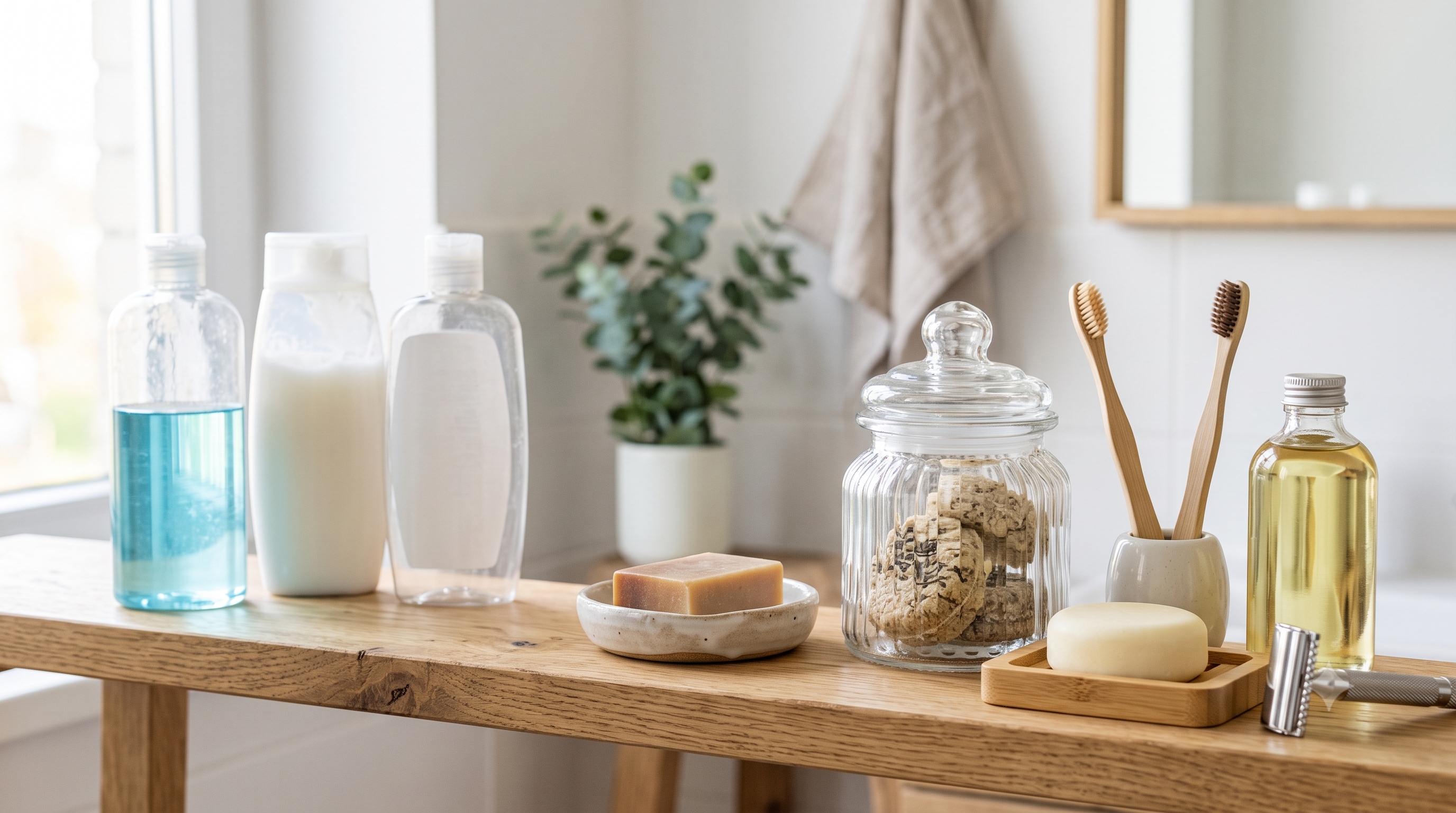
Of all the plastic that passes through an average home, personal care might be the category people think about least. Food packaging gets attention. So does the mountain of shipping boxes stacked by the recycling bin. But the small, private routine that happens at the bathroom sink every morning and night — brushing, flossing, washing, brushing hair — quietly produces some of the highest-frequency plastic waste in the entire house, precisely because it's used so often and replaced so routinely.
This is the first article in our new Plastic-Free Personal Care series. Over the next few weeks, we'll be publishing dedicated guides on building a full zero-waste personal care routine, choosing the right products for dental care, hair care, and skin care, and making the swap without sacrificing anything you actually rely on. Today, we're starting with the foundation: why personal care plastic matters in the first place, and where to begin if you want to change it.
The Scale of the Problem, Item by Item
It helps to start with some perspective. The Plastic Pollution Coalition estimates that the vast majority of all plastic ever manufactured still exists somewhere in the environment today, because plastic doesn't biodegrade — it fragments into smaller and smaller pieces called microplastics that persist in soil, waterways, and even the dust in our own homes.
Personal care is a significant, often-overlooked contributor to that total. A single plastic toothbrush takes centuries to break down, and dental professionals recommend replacing one every three to four months — which means a single adult can go through dozens of plastic toothbrushes over a lifetime, nearly all of which still exist somewhere today. Research groups like the 5 Gyres Institute, which studies plastic pollution in oceans and waterways, have specifically flagged personal care items — toothbrushes, cotton swab sticks, and their packaging — as a recurring category found during shoreline and water sampling.
None of this is about assigning blame for owning a plastic toothbrush or a bottle of shampoo. It's about recognizing that personal care, more than almost any other category in the home, is full of items designed to be replaced often — which makes the material they're made from matter quite a lot over the course of a year.
Where Plastic Is Hiding in Your Routine (An Honest Audit)
Walk through your own routine slowly and you'll likely find plastic in places you don't usually notice: the toothbrush handle, the floss container, the cotton swab sticks, the shampoo bottle, the hairbrush handle, the little pump on the body wash, the mesh pouf hanging in the shower.
Individually, none of these feel significant. Collectively, they represent a routine where nearly every tool touching your body every single day is made from a material that will outlast you by centuries. That's not a design flaw specific to any one brand — it's simply been the default manufacturing material for decades, largely because it's cheap to produce at scale, not because it's the best fit for items used daily against skin, hair, and teeth.
Why Bamboo and Natural Fibers Are Actually Better for This Category
Here's the part that often gets missed in conversations about sustainable swaps: bamboo isn't just a "greener" material for your Personal Care shelf — it's frequently a genuinely better-performing one, for reasons specific to how these products get used.
Personal care tools live in humid, damp environments by nature — a toothbrush by a sink, a hairbrush that collects natural oils, a loofah that's wet more often than it's dry. This is exactly where bamboo's natural antimicrobial properties matter most. Bamboo resists the buildup of bacteria and odor better than plastic does under repeated moisture exposure, which is precisely the condition a toothbrush handle or hairbrush lives in every day. Plastic, by contrast, tends to develop micro-scratches with use that trap bacteria and are difficult to fully clean — one of the less-discussed reasons plastic personal care tools can start to smell or discolor faster than expected.
Natural fibers behave similarly well. A natural loofah made from an actual loofah plant dries faster between uses than a synthetic pouf and doesn't shed microscopic plastic fiber into the water with every use — a detail worth sitting with, since groups like Ocean Conservancy have tracked exactly this kind of household fiber shedding as a meaningful, largely invisible contributor to the microplastic entering waterways.
What to Look for When Buying Bamboo Personal Care Products
Not all "bamboo" products are created equal, and it's worth knowing what separates a well-made piece from one that's bamboo in name only. A few things are worth checking before you buy:
Finish and treatment. Personal care items handle daily moisture, so look for products described with a natural oil finish or wax suited to wet environments, rather than raw, untreated bamboo that hasn't been prepared for repeated humidity exposure.
Solid construction versus composite. Some lower-cost "bamboo" items are actually a thin bamboo veneer over a plastic core — technically containing bamboo, but not delivering the durability or biodegradability of a solid bamboo piece. Reading the material description closely, not just the product name, usually clears this up quickly.
Bristle and fiber material. A bamboo toothbrush handle doesn't automatically mean a plastic-free bristle — some use nylon bristles for durability, which is a reasonable trade-off, but it's worth knowing which type you're buying if a fully biodegradable bristle matters to you.
Realistic expectations about lifespan. A quality bamboo hairbrush or exfoliating tool should be marketed and priced as something built to last, not as a disposable novelty. If a listing reads more like a one-season gimmick than a long-term fixture, that's usually a signal about the underlying build quality.
None of this requires becoming an expert in manufacturing. It just means treating a bamboo personal care purchase the way you'd treat any other daily tool — asking a few basic questions before checkout rather than assuming the material name alone guarantees the quality.
A Category-by-Category Plan for Swapping It Out
The easiest way to approach plastic-free personal care isn't to replace everything at once — it's to work through the routine in the order things naturally wear out, starting with the items you touch every single day.
Dental care. A bamboo toothbrush is one of the most-used tools in the house and one of the easiest plastic swaps to make, since most people replace this item on a schedule anyway. Pair it with natural toothpaste tablets instead of a squeeze tube, and a bamboo floss refill pack — or bamboo charcoal floss in a reusable glass container if you'd rather refill one container than toss a plastic case every few weeks. A bamboo toothbrush stand keeps everything upright and dry between uses, which matters more than it sounds like it would for how long a bristle actually lasts.
Hair care. A full-size bar from the shampoo bar collection replaces the plastic bottle entirely, and a single bar typically lasts as long as two to three bottles of liquid shampoo. A bamboo paddle hairbrush swaps out the plastic-and-nylon brush most people reach for daily, and its wide, gentle pins tend to be easier on both hair and scalp than a synthetic paddle.
Skin and body care. A natural exfoliating loofah or a sisal exfoliating glove replaces the synthetic mesh pouf, and a sisal soap saver bag makes the most of every last sliver of a bar of soap instead of it getting soft and wasted in a dish. For everyday small swaps, bamboo cotton ear buds replace a genuinely surprising volume of plastic-stemmed swabs over a year, and a bamboo facial rounds holder keeps reusable rounds tidy on a counter instead of reaching for a fresh disposable pad each time.
You don't need to do all of this in one weekend. Even swapping one or two of these categories — starting with whatever wears out or runs out first — makes a meaningful dent in the plastic that cycles through your routine every year.
A Simple 30-Day Personal Care Swap Challenge
If a full routine overhaul feels like too much at once, spreading the swaps out over a month tends to make the habit stick better than trying to do it all in a single weekend.
Week 1: Replace your toothbrush and switch to toothpaste tablets or a refillable floss container. These are the two highest-frequency-use items in the routine, and the easiest to notice the difference immediately.
Week 2: Swap the shampoo bottle for a bar. It's a small adjustment in technique, but one that removes a recurring plastic bottle from your shower shelf for good.
Week 3: Replace the shower pouf with a natural loofah or a sisal exfoliating glove, and add a soap saver bag if you're using bar soap already.
Week 4: Round out the routine with smaller items — cotton ear buds, a facial rounds holder, or a hairbrush — based on whatever your routine is still missing.
By the end of the month, most of the plastic that used to cycle through your daily routine every year has been replaced with something built to last considerably longer, without it ever feeling like a single overwhelming project.
A Few Myths About Bamboo Personal Care Products
"Won't bamboo get moldy with daily moisture exposure?" This is the most common concern, and it's a fair one — but it's largely a manufacturing and care question, not a material flaw. Well-made bamboo personal care products are typically treated to resist moisture, and simply allowing items like a toothbrush or hairbrush to air-dry fully between uses keeps them performing well for months.
"Isn't bamboo more expensive than plastic in the long run?" Often the opposite is true. A shampoo bar that lasts as long as two or three bottles of liquid shampoo, at a similar or lower price point, works out to a lower cost per wash over time — even before accounting for the packaging you're no longer buying.
"Doesn't a bamboo toothbrush feel less 'clinical' than a plastic one?" This one's largely a first-impression bias. In practice, the bristles do the same job regardless of handle material, and most people report the difference disappears entirely after the first few uses.
"Is bamboo sourcing actually sustainable, or is it a marketing claim?" It depends heavily on the source, which is worth asking about with any bamboo product you buy. Bamboo is a fast-growing grass that can regenerate without replanting and typically requires no pesticides or fertilizer to thrive — fundamentally different from slower-growing hardwood forestry. This is also where a brand's broader environmental commitments matter — at Bamboo Switch®, that's part of why we're transparent about programs like our Climate Commitment to offset shipping emissions, rather than only marketing the product material itself.
Frequently Asked Questions
How often should I replace a bamboo toothbrush? The same guidance applies as with a plastic one — roughly every three to four months, or sooner if the bristles fray. The difference is what happens afterward: a bamboo handle breaks down naturally, while a plastic one persists indefinitely.
Do shampoo bars work for all hair types? Most formulations work well across hair types, though very hard water can sometimes leave a slight residue on certain textures — a diluted vinegar rinse afterward resolves this for most people who notice it.
Is it normal for a natural loofah to shed some fiber at first? A small amount of shedding when a loofah is brand new is normal and stops within the first few uses — this is unrelated to the ongoing microplastic shedding of a synthetic pouf, which continues for the entire life of the product.
Is switching my whole routine at once necessary to make a difference? No. Swapping even a single high-frequency item, like a toothbrush or a bottle of shampoo, removes a recurring source of plastic waste from your routine immediately — there's no minimum threshold required before a swap "counts."
What should I do with the plastic items I'm replacing? If they still work, the most sustainable option is usually to keep using them until they wear out rather than discarding something functional — save the new bamboo version for when the old one actually needs replacing. If an item is already broken or past its useful life, check whether your local recycling program accepts that specific type of plastic before throwing it in a general bin, since personal care plastics like toothbrush handles are often not accepted curbside.
Is this swap realistic if I travel a lot? Yes — most of these items are just as portable as their plastic counterparts. A bamboo toothbrush, a bar of shampoo, and a small floss container pack just as easily into a toiletry bag as anything you're replacing, usually with less bulk once liquids are out of the equation.
Where This Series Goes Next
This article is meant to be the foundation for everything else we'll cover in the Plastic-Free Personal Care series — the next guide goes deeper into building a full routine, head to toe, with specific product pairings for dental, hair, and skin care that work together rather than as one-off swaps.
For now, the best place to start is wherever your own routine needs it most. Take a look at our full Personal Care collection and consider which single swap you'd actually keep up with — that's the one worth making first. Every large shift toward a plastic-free routine starts with a small, sustainable decision made at the bathroom sink, and every Bamboo Switch® order along the way ships with carbon-neutral shipping, so the swap itself starts with a lighter footprint too.
🌿 Continue Your Journey
Enjoyed this article? Here are three ways to take the next step:
🌱 Make The Bamboo Switch™ Learn how one small change can create lasting impact.
🌎 Made The Bamboo Switch™ Join a growing community choosing progress over perfection.
🤝 Become a Bamboo Switch Guide Help others discover thoughtful, sustainable living while earning rewards.
Share:
Your Plastic-Free Summer Adventure: A Bamboo Packing List for Camping, Road Trips & Days Outside
Building a Zero-Waste Laundry Routine