
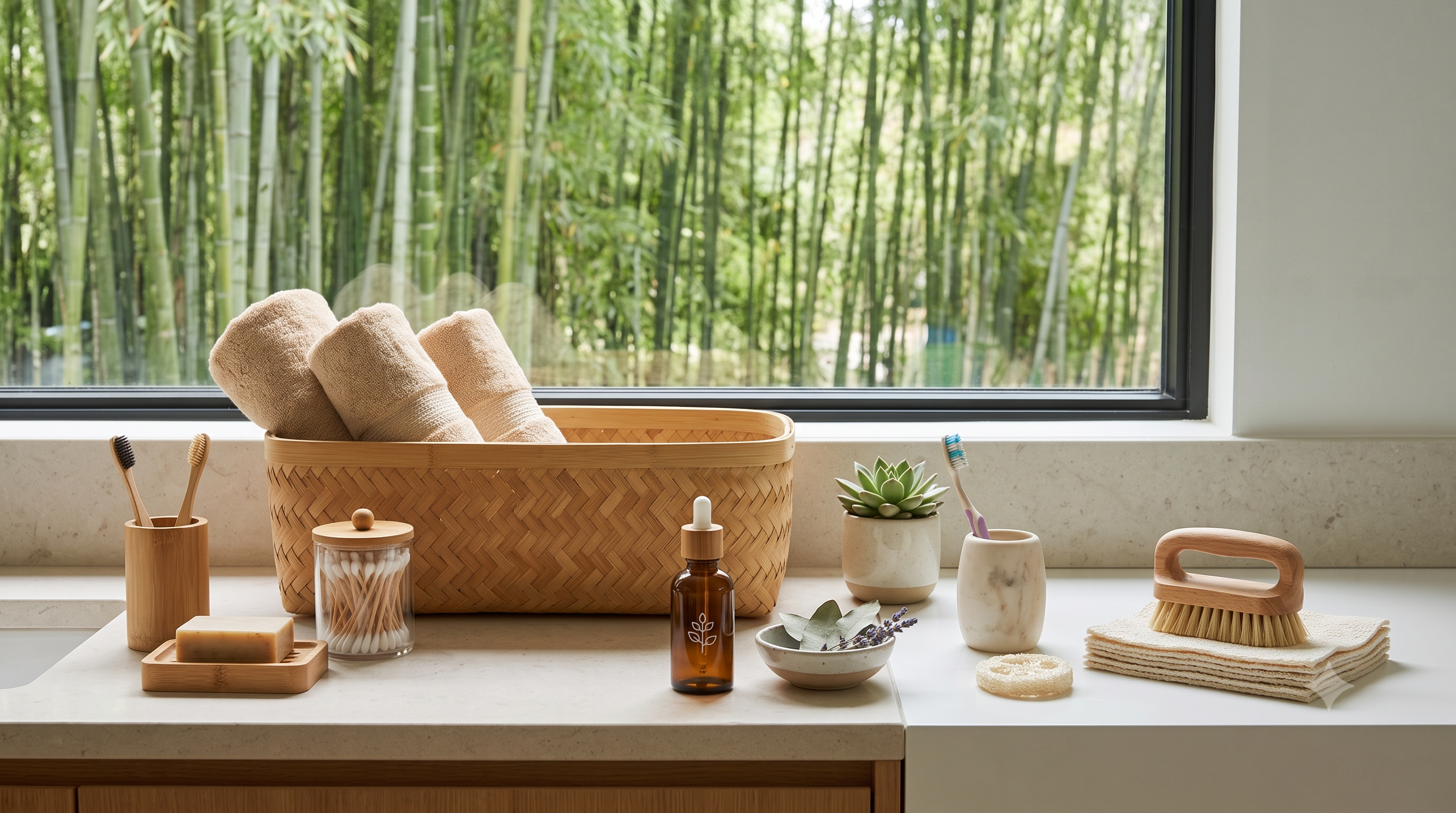
Setting up a plastic-free bathroom is the easy part, relatively speaking — it’s a single afternoon of swapping a few items, and then it’s done. Keeping it running well week after week is the part that actually determines whether it stays that way, and it’s also the part most guides skip entirely. A bamboo bath mat that never gets aired out, a soap dish that never gets wiped down, or a shower caddy that quietly accumulates grime doesn’t fail because the material was wrong — it fails because nobody built a maintenance habit around it.
This is that habit, broken down into a routine that takes about ten minutes, once a week, and covers every plastic-free piece in a typical bathroom. It’s meant to be fast enough that it actually happens on a busy Sunday or a weeknight, rather than becoming its own dreaded chore that gets postponed indefinitely.
Why a Weekly Reset Beats an Occasional Deep Clean
A once-a-month deep clean sounds thorough, but it tends to let small maintenance issues compound in between — a bath mat that’s been sitting damp for three weeks develops a very different problem than one that’s aired out weekly. A shorter, more frequent routine catches issues before they become genuine problems, and it’s also simply easier to sustain, since ten minutes on a predictable schedule is a much smaller ask than an occasional ninety-minute overhaul.
This matters specifically for natural materials like bamboo and natural fiber, which respond well to light, consistent maintenance and less well to being ignored for weeks and then scrubbed intensively all at once. A weekly rhythm is closer to how these materials are actually meant to be cared for, and it aligns with what the American Bamboo Society notes about bamboo’s natural resistance to bacteria and moisture damage — that resistance works best as a supplement to basic upkeep, not a replacement for it entirely.
Minute One Through Three: The Bath Mat
Start with the item that takes the most ongoing moisture exposure. A bamboo bath mat should be lifted and propped on its edge or against a wall once a week to let both sides air out fully — the slatted design already helps water drain rather than pool, but a weekly airing prevents any residual dampness from lingering in the corners or underside. A quick wipe with a damp cloth handles any soap residue or buildup on the surface itself.
This single step does more for long-term bamboo bathroom maintenance than almost anything else on this list, since standing moisture is the primary factor that shortens the life of any natural material used in a wet environment.
Minute Three Through Five: Soap and Shower Storage
Next, check the bamboo shampoo and soap bar lift dish and give it a quick rinse to clear away any soap film that’s built up on the slats over the week. The same goes for an overhead bamboo shower caddy — a fast wipe-down clears any product residue that’s dripped down from shampoo or soap bottles resting on it, which otherwise builds up gradually until it becomes a bigger job.
If a bar of soap or shampoo bar looks like it’s softening faster than expected, this is also the moment to check whether it’s draining properly between uses, since a dish that isn’t tilted or slatted correctly lets water pool and shortens the bar’s usable life.
Minute Five Through Seven: Toilet Area and Wall Storage
A quick pass over the toilet brush and cleaner stand — rinsing the brush and wiping down the stand itself — takes less than a minute but prevents the kind of buildup that eventually requires a much more involved clean. The bamboo toilet paper holder with drawer or bamboo toilet paper stand just needs a quick dust-off and a check that the drawer or reserve roll is stocked for the week ahead.
While you’re at it, give the bamboo wall hook rack a glance — a hook rack holding damp towels day after day benefits from a quick wipe to prevent any moisture buildup where the hooks meet the wall mount.
Minute Seven Through Nine: The Foot Stool and Small Surfaces
A bamboo foot stool that doubles as a small shelf tends to collect a light layer of dust or product residue over a week, especially if it’s holding towels or a shower caddy overflow. A fast wipe here takes seconds but keeps the piece looking and functioning like new far longer than it would with monthly-only attention.
This is also the moment to do a fast surface check across the room generally — any counter space, ledge, or shelf edge that’s picked up a light film over the week gets a quick pass before moving on to the final step.
Minute Nine Through Ten: Laundry Check-In
The last step ties the bathroom routine to the laundry routine, since bath towels, mats, and washcloths cycle between the two. Toss the previous week’s towels and any washable rugs into a load, using wool dryer balls instead of single-use dryer sheets to keep them soft without added synthetic fragrance layers building up on the fabric over time. The Plastic Pollution Coalition has noted that many conventional dryer sheets are made with synthetic fibers and coatings that end up in landfill waste after a single use, which is exactly the kind of small, repeated waste a reusable dryer ball routine avoids entirely. If washcloths or smaller items are part of the load, a cotton mesh wash bag keeps them contained and prevents them from getting tangled with larger items in the wash.
This step closes the loop on the entire routine — a bathroom that’s just been wiped down and reset also gets fresh towels and a clean mat waiting for it, rather than the same slightly-past-due linens going right back onto newly cleaned surfaces.
Why Consistency Matters More Than Intensity Here
The whole premise of a ten-minute weekly reset is that consistency beats intensity for this particular kind of maintenance. A single ninety-minute deep clean every month or two feels productive, but it leaves three or four weeks in between where small issues — a damp mat corner, a slightly grimy caddy — are quietly compounding. Natural materials in particular respond better to frequent, light maintenance than infrequent, heavy maintenance, since consistent airflow and quick cleaning prevent the kind of moisture buildup that causes real problems down the line.
This is also just a more realistic habit to actually keep. A ten-minute task fits into an existing Sunday routine or a weeknight without requiring you to carve out dedicated time, which is exactly why it’s more likely to actually happen week after week than a longer, more involved clean that keeps getting pushed to “this weekend” indefinitely.
Building the Routine Into an Existing Habit
The easiest way to make this stick is to attach it to something you’re already doing weekly rather than treating it as a new, standalone task. Pairing the bathroom reset with laundry day is a natural fit, since towels and mats are already cycling through the wash on some kind of weekly schedule anyway. Doing it right before or after a weekly grocery trip or meal prep session works just as well — the specific anchor matters less than having one at all. Eco-Cycle makes a similar point about sustainable household habits generally: routines that attach to an existing anchor tend to survive far longer than ones that rely purely on remembering to do them.
What to Look for in a Bathroom Built for Easy Maintenance
Slatted and ventilated design. Pieces that allow airflow and drainage — a slatted bath mat, a lift dish for soap — require less active maintenance because they’re doing part of the work passively, all week long.
Pieces that wipe down quickly. Smooth, sealed bamboo surfaces clean up faster than textured or unfinished surfaces, which matters when the entire goal is a routine that takes minutes, not an hour.
A logical order that avoids backtracking. Working through a bathroom in one direction — mat, then shower storage, then toilet area, then small surfaces — is faster than jumping around the room and circling back.
A laundry step that’s actually built in. A maintenance routine that doesn’t account for towels and mats leaves a gap — pairing bathroom maintenance with laundry day closes it.
A Few Myths About Bathroom Maintenance Routines
“A quick weekly routine isn’t enough to keep a bathroom actually clean.” For natural materials especially, frequent light maintenance often outperforms occasional deep cleaning, since it prevents the kind of moisture buildup that causes bigger problems in the weeks between deep cleans.
“Bamboo bathroom pieces need more maintenance than plastic ones.” The opposite is generally true — bamboo’s natural resistance to bacteria and odor means it often requires less aggressive cleaning than plastic, which can develop buildup in ways that need harsher products to fully address.
“A bath mat just needs to be there — it doesn’t need active maintenance.” A bamboo bath mat left flat on the floor without ever being lifted to air out can develop moisture issues underneath, even with a slatted design — a weekly airing prevents this proactively.
“Ten minutes isn’t enough time to actually clean a bathroom.” This routine isn’t a full deep clean — it’s targeted maintenance for the specific pieces that make a plastic-free bathroom work, which takes far less time than a full scrub-down precisely because it’s frequent and preventative.
“Maintenance routines only matter for people with large bathrooms.” If anything, a small bathroom benefits more from a consistent routine, since there’s less room for moisture or clutter to spread out unnoticed before it becomes an obvious problem.
Frequently Asked Questions
How often should a bamboo bath mat actually be aired out? Once a week is a good baseline for most households — more frequent use or a particularly humid bathroom might benefit from airing it out every few days instead.
What’s the fastest way to clean a bamboo soap dish? A quick rinse under running water clears most soap film from a bamboo shampoo and soap bar lift dish — an occasional light scrub with a soft brush handles any more stubborn buildup.
Do I need special cleaning products for bamboo bathroom items? No — plain water and a mild soap are usually sufficient for weekly maintenance; harsh chemical cleaners aren’t necessary and can actually degrade a natural finish faster over time.
How do I know if my shower caddy needs more than a quick wipe? If product residue has built up enough that a quick wipe doesn’t remove it, a monthly deeper clean with warm soapy water on the overhead bamboo shower caddy usually resolves it.
What if I miss a week — does the routine fall apart? Not at all — missing an occasional week just means slightly more buildup to address the following week; the routine is meant to be sustainable, not rigid, and picking back up is simple.
Should wool dryer balls be washed or replaced regularly as part of this routine? Wool dryer balls don’t need washing between loads and typically last for hundreds of loads before needing replacement, so they’re a low-maintenance part of this routine rather than an added task.
Is this routine different for a shared or multi-person bathroom? The core steps stay the same, though a shared bathroom may need the routine run more than once a week if usage volume is higher — the ten-minute format still applies, just potentially on a twice-weekly basis.
Can this routine be shortened further for an especially busy week? The bath mat airing and soap dish rinse are the two highest-impact steps if time is tight — prioritizing those two alone still meaningfully reduces moisture-related wear even if the rest of the routine gets skipped that week.
A plastic-free bathroom doesn’t require a complicated maintenance system to keep working well — it just requires a small, repeatable routine that actually happens on a regular basis, rather than an ambitious deep-clean plan that keeps getting pushed to next weekend. Ten minutes, once a week, covering the mat, the soap storage, the toilet area, and a quick laundry check-in is enough to keep every piece in a bamboo bathroom functioning the way it’s meant to for years. Take a look at our full Home & Bath collection if any part of this routine points to a piece your bathroom is still missing.
🌿 Continue Your Journey
Enjoyed this article? Here are three ways to take the next step:
🌱 Make The Bamboo Switch™ Learn how one small change can create lasting impact.
🌎 Made The Bamboo Switch™ Join a growing community choosing progress over perfection.
🤝 Become a Bamboo Switch Guide Help others discover thoughtful, sustainable living while earning rewards.
Share:
Why Your Skin (and the Planet) Notices the Difference: Bamboo vs. Plastic Personal Care
Sunday Meal Prep for a Busy School Year: A Zero-Waste Kitchen Routine