
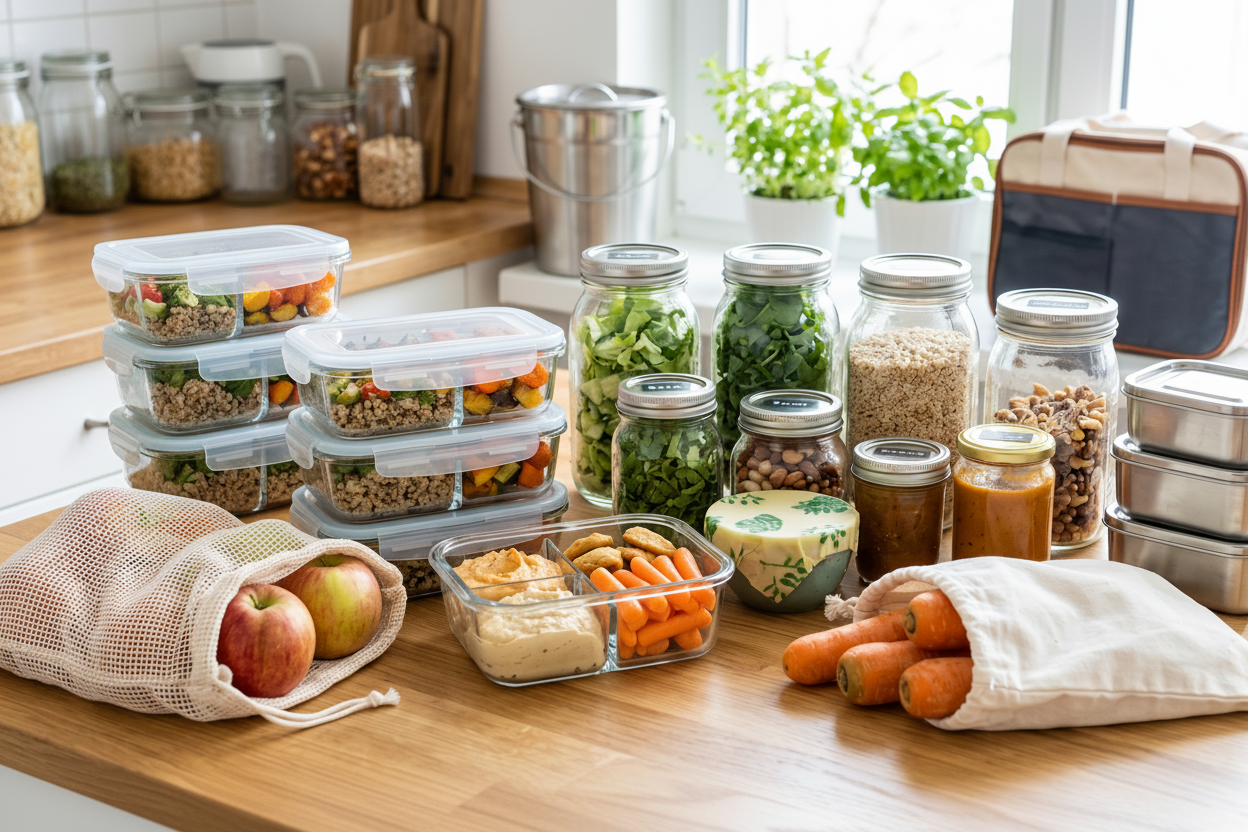
Once school is back in session, weeknights stop being a reliable time to cook. Between homework, activities, and everyone’s schedules running in different directions, the households that actually make it through a school year without daily dinner scrambles tend to have one thing in common: a Sunday routine that does most of the week’s real cooking work in a single afternoon.
This is a batch-cooking routine, not a lunch-packing guide — the focus here is on the Sunday prep session itself: what gets cooked, chopped, and portioned ahead of time, and the kitchen setup that makes that session faster and less wasteful every single week, from the first Sunday of the school year through the last.
Why Sunday Prep Works Better Than Daily Cooking During the School Year
A single, longer cooking session on a Sunday is fundamentally more efficient than seven shorter sessions spread across the week, for a few compounding reasons. Chopping vegetables once for the whole week takes less total time than chopping a smaller amount seven separate times, since a lot of the time cost in cooking is setup and cleanup, not the actual chopping itself. The same principle applies to sauces, grains, and proteins — batch-cooking a large pot of rice or a big batch of a sauce base on Sunday means five weeknight dinners each only require a quick reheat and assembly.
It also reduces food waste in a meaningful way. Cooking with intention for the specific week ahead, rather than deciding meal by meal, tends to use up exactly what’s needed rather than leaving partial ingredients to go bad in the back of the fridge — a pattern that’s easy to fall into when weeknight cooking happens on the fly. The Story of Stuff Project has written about how unplanned, meal-by-meal grocery shopping is one of the biggest drivers of household food waste, precisely because it leads to overbuying ingredients that never get used before they spoil.
Setting Up the Sunday Prep Station
A dedicated prep station makes the whole session move faster, and it starts with cutting surfaces sized for real volume, not a single dinner’s worth of chopping. A 16-inch bamboo cutting board with handle gives enough surface area to work through a week’s worth of vegetables in fewer batches, and the built-in handle makes it easy to carry a full board of chopped ingredients straight to a pot or storage container without a second trip. For prep sessions that involve cheese, cured meats, or assembling snack boards for the week, a square charcuterie board with a utensil drawer keeps everything organized in one place, drawer included.
Cooking in Bulk: Tools That Handle Real Volume
Sunday prep usually means cooking larger quantities than a typical single dinner, which is where the right tools make a real difference in both speed and mess. A 4-piece kitchen utensil set covers stirring, flipping, and serving across multiple pots and pans going at once, and a kitchen serving set makes portioning a big batch of a finished dish into individual containers faster than working with a single mismatched spoon. For anything grilled — a common Sunday-prep move for proteins that reheat well across the week — a set of barbecue grilling tongs handles the volume of a full week’s worth of chicken or vegetables in a single grilling session.
Portioning for the Week Without More Plastic
Once cooking wraps up, portioning is where a lot of kitchens fall back on plastic wrap or single-use bags without thinking much about it — exactly the kind of recurring, small-volume plastic use that the Plastic Pollution Coalition points to as easy to overlook precisely because it happens in the kitchen every week rather than as a single, obvious purchase. A bamboo spice jar works well for portioning sauces, dressings, or spice blends made in bulk on Sunday and used throughout the week, giving each one a dedicated, reusable container instead of a rotating stack of plastic containers with mismatched lids. A honey dipper is a small but genuinely useful addition here too, for anyone prepping oatmeal, marinades, or glazes that call for a controlled amount of honey rather than a messy pour straight from the jar.
The Sunday Morning Ritual Before the Work Begins
For a lot of parents, Sunday prep day starts with coffee or tea before the actual cooking begins, and that small ritual is worth setting up properly too, since it’s often the only quiet ten minutes in an otherwise busy day. A bamboo French press makes a full pot to sip on throughout the prep session, and a bamboo coffee cup holder keeps a mug within reach on the counter without it getting knocked over mid-chop.
For households that prefer tea, a tea strainer and a bamboo tea coaster holder set do the same job, and a matcha whisk paired with a matcha scraper covers a matcha-based version of the same ritual for anyone who prefers it.
A Sample Sunday Prep Flow
Here’s roughly how a Sunday prep session tends to unfold once the setup and tools are in place:
- Coffee or tea first, while planning the week’s meals against what’s already in the fridge and pantry.
- Chop all vegetables needed for the week in one pass on the bamboo cutting board, sorted by which meals they’re headed toward.
- Cook grains, proteins, and sauces in batches, using the kitchen utensil set to manage multiple pots at once.
- Portion finished components into reusable containers, using a kitchen serving set for even distribution across the week.
- Set aside anything meant to be served cold or as a snack on a woven coaster set for easy weeknight table setting.
Why This Routine Actually Sticks Through a Full School Year
A lot of meal prep advice sounds great in August and quietly falls apart by October, usually because the initial setup wasn’t built for repetition. The routine here is designed around reusable tools that don’t need replacing partway through the year, and a workflow that gets faster with repetition rather than staying equally time-consuming every single week. By the fourth or fifth Sunday, most families find the whole session takes noticeably less time than the first one did, simply because the setup and the order of operations have become familiar.
That durability matters for waste, too, not just time. A cutting board, a set of tongs, and a few reusable containers used weekly for an entire school year replace what would otherwise be a steady stream of plastic wrap, disposable containers, and single-use bags bought and thrown away week after week. Eco-Cycle frames this kind of routine-based waste reduction as one of the most effective habits a household can build, since it removes recurring waste automatically rather than requiring a conscious decision every single time.
What to Look for in Sunday Prep Tools Specifically
Size for real volume, not single portions. Tools sized for a week’s worth of food — a larger cutting board, tongs built for a full batch rather than a single serving — save real time over a whole school year of weekly use.
Durability for weekly, repeated use. A tool used every single Sunday for nine months needs to hold up structurally, which is a different bar than an occasional-use kitchen item.
Multi-use pieces where possible. A charcuterie board that also functions as a serving board, or a serving set that works for both cooking and portioning, reduces the total number of tools needed for the routine.
Easy cleanup between uses. A Sunday prep session already takes time — tools that clean up quickly matter more here than they would for an occasional-use item, since cleanup happens every single week without exception.
A Few Myths About Weekly Batch Cooking
“Batch cooking on Sunday takes just as long as cooking every night individually.” Most families find the opposite once a routine is established — chopping and cooking in bulk once is faster than repeating smaller versions of the same tasks seven times, mostly because setup and cleanup only happen once.
“You need special equipment to do real batch cooking.” A well-sized cutting board and a kitchen utensil set cover most of what a Sunday prep session actually requires — no specialized appliances necessary.
“Meal prep only works for families who eat the exact same thing every week.” A prep session built around components — grains, proteins, chopped vegetables, sauces — rather than fully assembled dishes gives enough flexibility to mix and match differently across the week, not just repeat one meal five times.
“Reusable containers are less convenient than disposable ones for a busy week.” Once a rotation is established, reusable containers are just as fast to grab from the fridge as disposable ones, without the ongoing cost and waste of replacing them every week.
“A Sunday routine falls apart the first time something comes up that day.” Most families build in enough flexibility to shift the session to Saturday evening or early Monday when needed — the value is in having a consistent weekly rhythm, not in it being rigidly tied to one specific day.
Frequently Asked Questions
How long does a typical Sunday prep session take once the routine is established? Most families report sessions of one to two hours once the routine is familiar, covering vegetable prep, batch cooking, and portioning for the full week ahead.
What’s the best cutting board size for prepping a full week of meals at once? A 16-inch cutting board gives enough surface area to work through larger quantities in fewer passes than a smaller, single-meal-sized board.
Can this routine work if my family’s schedule doesn’t allow a full Sunday afternoon? Yes — the same principles apply to a shorter session focused on just one or two components, like chopping vegetables and cooking a grain, rather than the entire week’s meals in one sitting.
How do I keep portioned food organized in the fridge for the week? Labeling containers by day or by meal component, and grouping similar items together, makes it easy to grab exactly what’s needed on a busy weeknight without searching through the whole fridge.
Do bamboo cutting boards and utensils need special care for this kind of frequent, heavy use? A quick hand wash and occasional oiling for the cutting board keeps it in good shape under weekly heavy use — avoiding the dishwasher and prolonged soaking are the two biggest factors in long-term durability.
What’s a good way to use the Sunday coffee or tea ritual without adding to the day’s mess? A bamboo coffee cup holder keeps a mug safely off the counter’s working surface, and a tea coaster holder set does the same for tea drinkers.
How many meals can realistically come out of one Sunday prep session? Most families cover four to five weeknight dinners plus breakfast or snack components from a single well-organized Sunday session, though this varies by household size and appetite.
What’s the single highest-impact tool to start with if I’m building this routine from scratch? A properly sized cutting board tends to have the biggest immediate impact, since vegetable prep is usually the most time-consuming single task in a batch-cooking session.
A busy school year doesn’t leave much room for daily cooking, and it doesn’t need to — a well-set-up Sunday routine, repeated with the same reusable tools week after week, does most of the real work in a single afternoon and keeps a family fed through five busy weeknights without a steady stream of plastic wrap and disposable containers along the way. Once the rhythm is established, it tends to get faster and easier every week, not harder, right through to the last week of the school year.
🌿 Continue Your Journey
Enjoyed this article? Here are three ways to take the next step:
🌱 Make The Bamboo Switch™ Learn how one small change can create lasting impact.
🌎 Made The Bamboo Switch™ Join a growing community choosing progress over perfection.
🤝 Become a Bamboo Switch Guide Help others discover thoughtful, sustainable living while earning rewards.
Share:
The 10-Minute Bathroom Reset: A Weekly Plastic-Free Maintenance Routine
Traveling Light, Traveling Clean: A Plastic-Free Personal Care Travel Kit